
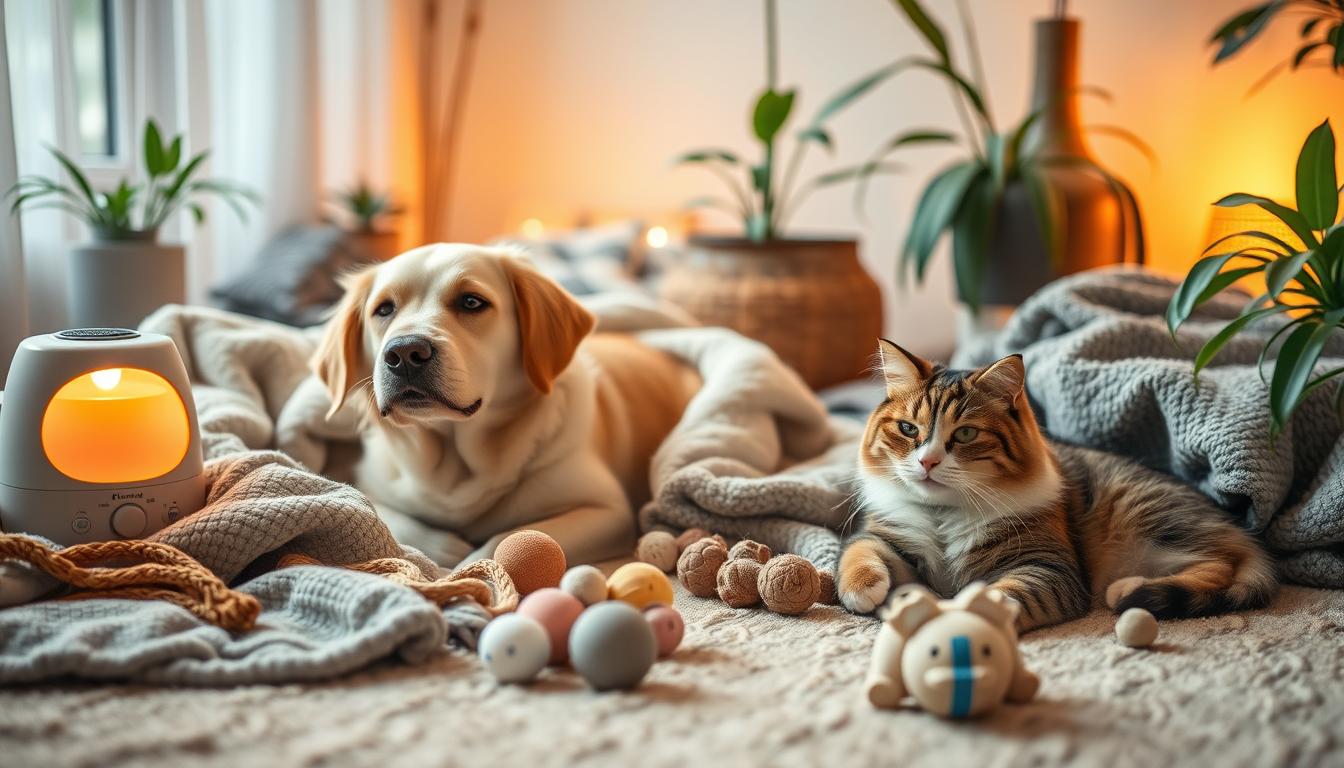
Having a pet brings joy and companionship. But, it also comes with challenges like managing pet anxiety. This issue can affect your pet’s wellbeing and your daily life.
This article will help you understand pet anxiety. We’ll cover common causes, triggers, and solutions. By learning more, you can improve your pet’s mental health and create a more peaceful home.
Quick Recommendation: Our blog is filled with tips and information on keeping your dog healthy and happy. If you are interested in natural and holistic approaches to wellness, click here to see our #1 recommendation!
What Is Pet Anxiety?
Pet anxiety is when an animal feels very nervous or uneasy. It’s more than the usual stress they might show. This can really hurt their pet mental health and show in different ways.
For example, they might bark too much, chew things they shouldn’t, or even get aggressive. These signs mean your pet is likely feeling anxious.
Knowing what causes pet anxiety is key to helping them. Sometimes, pets can start feeling anxious suddenly. Spotting these signs early can really help manage their health.
By watching for these symptoms, you can understand what’s making them feel this way. Then, you can take steps to make them feel better. This helps support their pet mental health and keeps them happy and healthy.
Common Causes of Pet Anxiety
Understanding Your Pet’s Anxiety means knowing what makes them stressed. Traumatic experiences, like past abuse or neglect, are big causes. Pets who have been hurt or scared often get anxious as a way to cope.
Being away from their owners is another big stressor. Pets and their humans often form strong bonds. When left alone for too long, pets can get anxious. This is especially true for dogs, who love being around people.
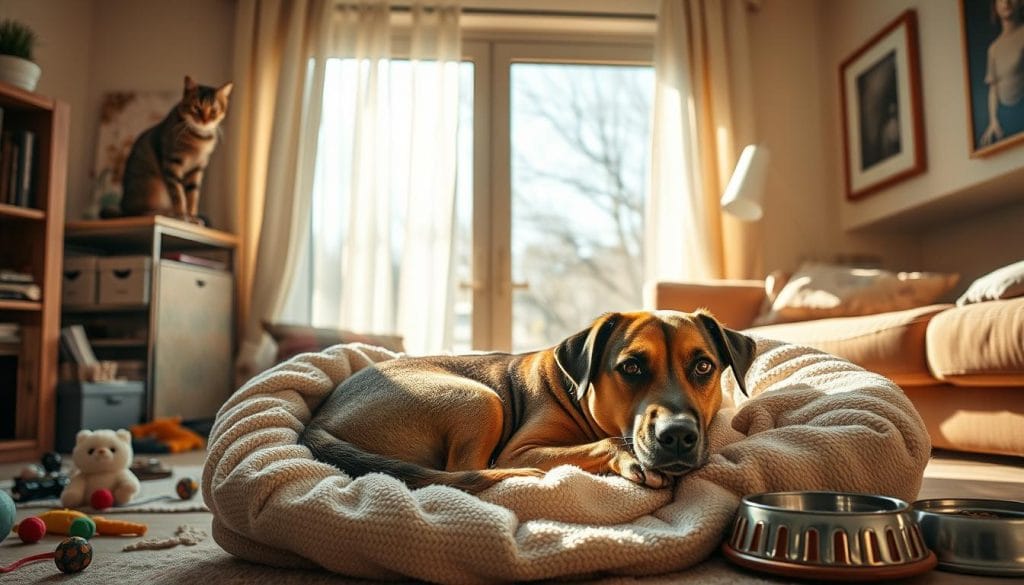
Changes in their environment can also make pets anxious. Moving to a new home, getting a new family member, or changing furniture can upset them. It makes them feel like their world is changing too fast.
Pets that don’t get to meet many people or animals when they’re young can get anxious easily. This is why it’s key to introduce them to new things slowly and positively. It helps them feel more comfortable and secure.
Disruptions in their routine can also make pets anxious. They like things to stay the same. Changes in their schedule, like different eating times or walking routes, can upset them. It’s like their whole world is turned upside down.
Knowing what causes pet anxiety helps you manage it better. You can make their life more comfortable and happy.
Pet Anxiety Triggers to Watch For
Knowing what makes your pet anxious is crucial for their happiness. Some things, like loud noises, can really upset them. It’s important to notice how they react to these events to help calm them down.
New people or animals in the home can also cause stress. Pets like their routine and can feel uneasy when it changes. Watching how they react helps you find ways to make them feel better.
Even small changes, like moving furniture, can bother your pet. Keeping an eye on how these changes affect them is key. By understanding what makes them anxious, you can help them feel more at ease. Being careful and using the right techniques can really help your pet’s mood.
How to Reduce Pet Stress in Everyday Life
Creating a calm and safe environment is key to reducing pet stress. Your home should be a place where your pet feels safe. Make sure to provide a cozy spot for them to relax.
This could be a quiet corner with a bed or a crate with soft bedding. Keep noise levels down. Introduce soothing music or white noise to mask sudden sounds.

Maintaining a consistent routine is also important. Regular feeding times, walks, and play can lower stress. This structure comforts anxious pets.
Daily play and exercise are vital for their well-being. Exercise helps burn off energy and prevents anxious behavior. Try interactive toys or puzzle feeders for mental stimulation.
Engage your pet with games like fetch or tug-of-war. Agility training sessions are great too.
Relaxation techniques are also effective. Gentle petting, massages, or pet-safe aromatherapy oils can soothe your pet. Some pets like calming pheromone sprays or diffusers.
Finally, provide mental stimulation with new experiences and training. Teach new tricks, offer varied toys, or introduce them to different environments. These steps help create a happier, more relaxed pet.
Effective Pet Behavior Modification Techniques
When dealing with pet anxiety, using effective behavior modification techniques is key. Positive reinforcement is a proven method. It rewards your pet for good behavior. This not only encourages positive actions but also strengthens your bond.
Desensitization is another useful technique. It gradually introduces your pet to things that make them anxious. This helps them get used to these triggers over time. Slowly increasing exposure helps your pet feel more comfortable in stressful situations.
Counter-conditioning is also effective. It changes how your pet feels about certain triggers. For example, if your pet gets anxious from the vacuum, pairing it with treats or play can help. This creates a positive association.
Success with these solutions requires patience and consistency. Sticking to these methods and being patient with your pet’s progress can make a big difference. Whether it’s positive reinforcement, desensitization, or counter-conditioning, these tools can help your pet do well.
Products and Tools to Help Manage Pet Anxiety
Dealing with a pet’s anxiety can be tough, but there are many tools to help. Calming treats, for instance, are made with ingredients like chamomile and L-theanine. They help soothe your pet and can ease anxiety from things like thunderstorms or fireworks.
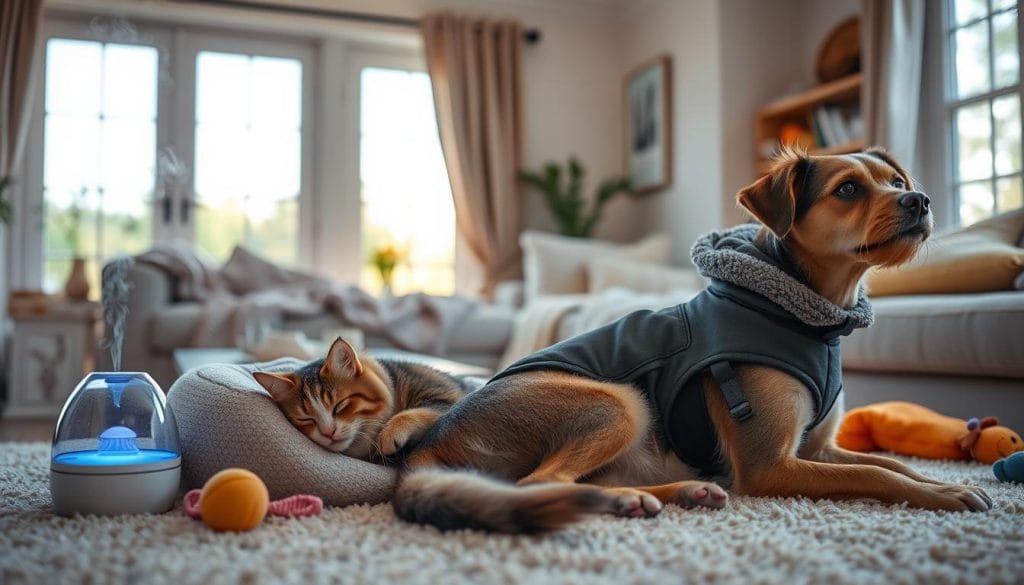
Anxiety wraps, like the ThunderShirt, apply gentle pressure to your pet’s torso. This can calm them down. They work well for pets anxious during car rides or vet visits. It’s key to pick the right size and ensure a snug fit for the best results.
Pheromone diffusers, such as Adaptil for dogs or Feliway for cats, mimic natural pheromones. They create a calm space for your pet. These are great for pets anxious about changes at home, like moving or new family members.
When picking products for pet anxiety, think about what your pet needs. Talking to your vet can help find the best tools for managing your pet’s anxiety.
Quick Recommendation: Our blog is filled with tips and information on keeping your dog healthy and happy. If you are interested in natural and holistic approaches to wellness, click here to see our #1 recommendation!
The Importance of a Healthy Diet for Pet Mental Health
It’s key to feed your pet a balanced diet for their mental health. Pets can get anxious and stressed, just like people. A good diet helps manage these feelings.
Proteins are important for making neurotransmitters, which control mood and behavior. Adding high-quality proteins to their food can help them stay mentally stable. Omega-3 fatty acids, found in fish, fight inflammation and boost brain function.
Vitamins and minerals are also vital. Not getting enough can cause anxiety and other behavioral problems. Make sure your pet gets enough B vitamins, especially B12, and minerals like magnesium to improve their mood.
When picking pet food, choose options that help with anxiety. These foods have nutrients that reduce stress and promote calmness. Stay away from foods with too many fillers, artificial preservatives, and colorings. They can harm your pet’s health.
Adding fresh, whole foods to their diet can also help. Vegetables, lean meats, and grains make for a healthier and calming diet. Always talk to your vet to create a diet plan that fits your pet’s needs. This will support their physical and mental health.
Holistic Tactics for Pet Anxiety Relief
More pet owners are using holistic methods to help their pets. These natural ways can help your pet feel calmer and happier. They work well with traditional treatments.
Aromatherapy is becoming popular. Essential oils like lavender and chamomile can calm pets. Just add a few drops to a diffuser to make a peaceful space for your pet.
Massage therapy is also helpful. Gentle massages can lower your pet’s stress. Massage their shoulders and back gently to help them relax.
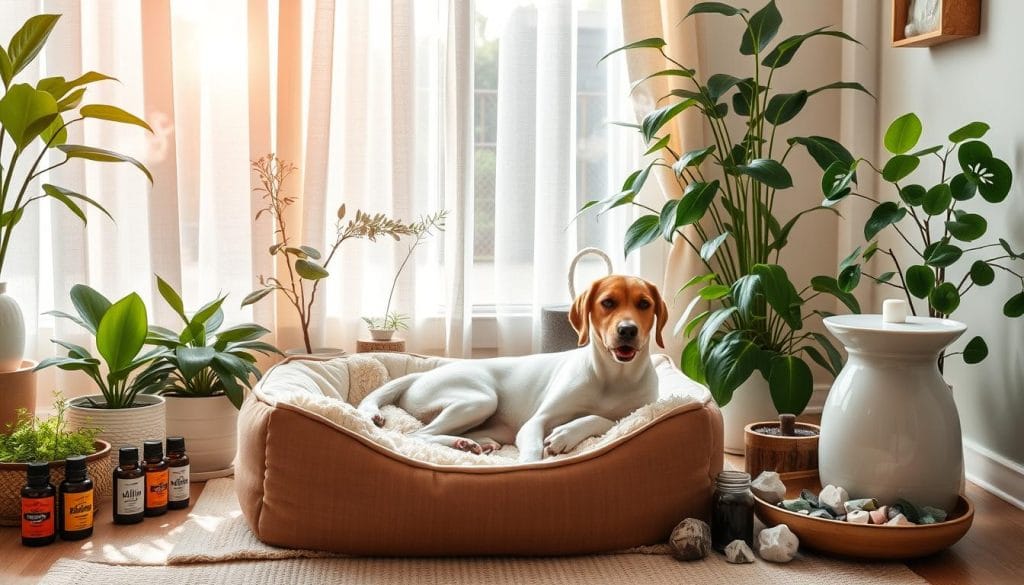
Herbal supplements are another good option. Herbs like valerian root and chamomile can calm pets. But, always talk to your vet before giving your pet new supplements.
Acupuncture is also effective for some pets. It helps balance your pet’s energy and improves their well-being.
Understanding your pet’s needs is key to holistic anxiety relief. Work with a vet to find the best mix of traditional and holistic methods. This can help change your pet’s behavior and reduce anxiety.
When to Seek Professional Help for Your Pet’s Anxiety
Sometimes, pets can get anxious, but it’s not always easy to handle at home. If your pet’s anxiety keeps coming back, it’s time to get help. Start by talking to a vet. They can check if there’s a health issue causing the anxiety.
Vets might suggest seeing an animal behaviorist or a pet trainer. These experts can create plans just for your pet. They can help find the cause of the anxiety and fix it for good.
Sometimes, pets need medicine to feel less anxious. Vets can give them special pills to help them relax. These pills are part of a big plan to help your pet feel better.
Getting help for your pet’s anxiety doesn’t mean you’ve failed. It means you care about your pet’s happiness. If your pet’s anxiety is really affecting their life, get help. Your pet needs the best care, and sometimes that means seeing experts.
Conclusion
Understanding your pet’s anxiety is key to their happiness. Knowing what causes it helps you make their space calmer. Using stress-reducing methods and changing their behavior are good first steps.
Choosing the right products and tools can also help a lot. There are many options like calming supplements and toys. A good diet and holistic practices like aromatherapy and massage also help.
But sometimes, you need professional help. If your pet’s anxiety is hard to handle, talk to your vet or a pet behaviorist. Being proactive and informed makes your pet’s life better. It also makes your bond stronger.
So, keep these tips in mind and start helping your pet today. It’s all about their mental health and happiness.
Quick Recommendation: Our blog is filled with tips and information on keeping your dog healthy and happy. If you are interested in natural and holistic approaches to wellness, click here to see our #1 recommendation!
BTW: If you are looking for tips and tricks on dog training, check out our friends at K9 Training Hub