

As a devoted pet owner, managing pet skin allergies is crucial for your furry friend’s overall well-being. Understanding the root causes and recognizing the symptoms early on can make a significant difference in your pet’s health. Pet dermatology is a specialized field that addresses various skin conditions, and a veterinary dermatologist can provide expert care tailored specifically to your pet’s needs.
This section will introduce you to the complexities of pet dermatology and the role of specialists in managing pet skin allergies. You will learn about comprehensive care strategies and why a proactive approach is vital for maintaining your pet’s skin health.
Quick Recommendation: Our blog is filled with tips and information on keeping your dog healthy and happy. If you are interested in natural and holistic approaches to wellness, click here to see our #1 recommendation!
Introduction to Pet Skin Allergies
Finding out your pet is uncomfortable can be upsetting. Pet skin allergies are common and cause many symptoms. Knowing about pet skin allergies is key to keeping your pet happy and healthy.
Pet skin allergies show up as intense itching, redness, and swelling. They can make dogs and cats scratch a lot, leading to skin problems. Signs include hair loss, too much licking, and ear infections.
Understanding pet skin allergies and spotting symptoms early helps a lot. This intro prepares you for learning more about causes, symptoms, diagnosis, and treatment. Let’s dive deeper into how to help your pet.
Common Causes of Pet Skin Allergies
Knowing what causes pet skin allergies can help you keep your pets happy and healthy. Common culprits include food sensitivities, environmental allergens, and contact allergens. Spotting these can greatly improve your pet’s life.

Environmental allergens are a big problem for pets. These can be pollen, mold, dust mites, and even grass. Pets that go outside a lot are more likely to get these allergens. Keeping their living area clean and bathing them regularly can help.
Food is another big allergen for pets. Common offenders are beef, dairy, wheat, and chicken. If you think your pet’s skin problems are from food, try an elimination diet. A vet can help figure out what’s causing the issue.
Contact allergens, like certain shampoos or cleaning products, can also cause problems. Using hypoallergenic products can help. Watching how your pet reacts to new things can also give you clues.
Knowing about these common causes lets you take steps to help your pet. This can make them much happier and healthier.
Identifying Symptoms of Pet Skin Allergies
Spotting pet allergy symptoms early can prevent your pet from feeling bad. One key sign is chronic itching. If your pet scratches a lot, it might be allergic.
Look for redness, irritation, and swelling on your pet’s skin too. These signs show your pet might be reacting to something in their world or food.
Watching how your pet acts is important. If they lick, bite, or chew a lot, it could mean they have skin allergies. Notice any changes in their usual behavior or new symptoms.
Knowing these symptoms helps find out what’s causing the allergies. Keeping an eye on your pet’s skin and behavior helps solve problems fast. This keeps them happy and healthy.
Diagnosis of Pet Skin Allergies
Getting a proper diagnosis from a vet is key to treating your pet’s skin allergies. Allergies can show many symptoms. So, it’s important to do detailed skin allergy tests for a correct diagnosis.
There are several ways to find out what’s causing your pet’s allergy. Intradermal skin testing, or IDT, involves injecting small amounts of possible allergens into the skin. Then, the vet watches for reactions. This method is very effective and often used with blood tests to check for antibodies against certain allergens.
Patch testing is another useful method. It involves applying allergens to patches and putting them on your pet’s skin. After a while, the vet checks the skin for reactions. This is great for finding contact allergies.
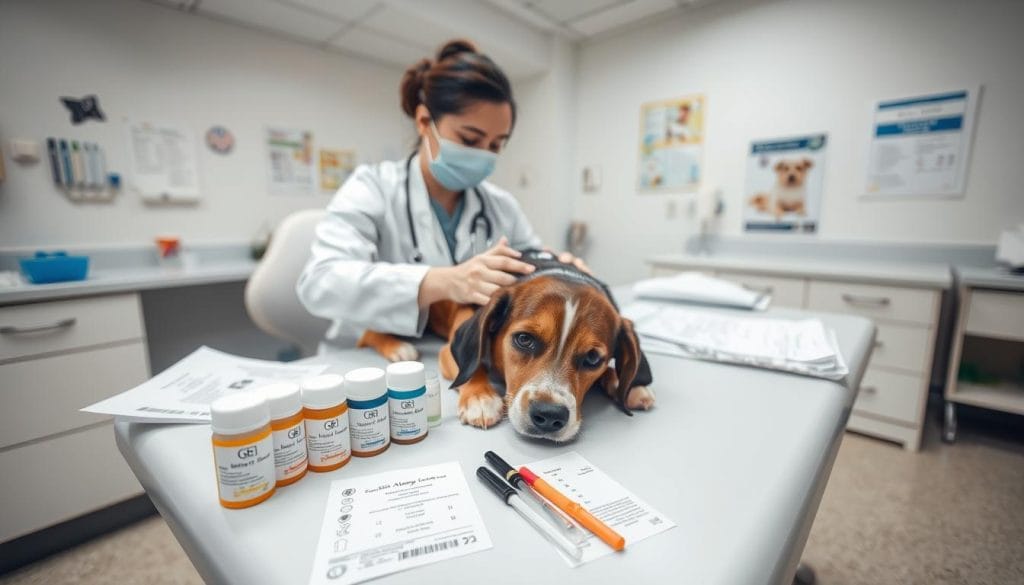
For a correct diagnosis, seeing a vet dermatologist is crucial. They can understand the results of these tests and create a treatment plan for your pet. Working with a vet specialist helps your pet stay healthy and comfortable.
Understanding and Treating Your Pet’s Skin Allergies
Managing pet skin allergies starts with knowing your pet’s condition well. A good treatment plan is key for your pet’s skin health. Working with your vet helps create a plan that fits your pet’s needs.
First, find and remove allergens from your pet’s space. This means using hypoallergenic food, special shampoos, and keeping things clean. These steps can greatly improve your pet’s comfort and health.
Your vet might suggest medicines like antihistamines, corticosteroids, or immunotherapy. These can help lessen symptoms and reduce itching.
Regular vet visits are also crucial. They help track your pet’s progress and adjust the treatment as needed. Being proactive and informed makes managing allergies easier, helping your pet live a better life.
Quick Recommendation: Our blog is filled with tips and information on keeping your dog healthy and happy. If you are interested in natural and holistic approaches to wellness, click here to see our #1 recommendation!
Top Treatments for Pet Skin Allergies
Dealing with your pet’s skin allergies can be tough. But, there are good treatments out there. Prescription medications are a key part of the solution. They help with itching and swelling.
These meds might include antihistamines, corticosteroids, and antibiotics. It depends on the allergy’s type and how bad it is.
Immunotherapy is another popular choice. It works by slowly introducing pets to allergens. This builds up their tolerance, making allergies less severe. It’s especially good for environmental allergies.
Topical treatments are also helpful. They include medicated shampoos, lotions, and sprays. These products soothe the skin and cut down on itching. Using them regularly can make your pet much more comfortable.
Don’t forget about dietary changes in pet allergy treatment. Some pets have food allergies. Changing their diet can help, with a vet’s advice.
By using prescription medications, immunotherapy, and topical treatments, you can manage your pet’s allergies. This ensures they live a happy, comfortable life.
Home Remedies for Pet Skin Allergies
Home remedies can be a great help when your pet has skin irritation. They can offer quick relief and improve their skin care. One easy remedy is an oatmeal bath. Oatmeal soothes the skin, reducing itchiness and inflammation.
Aloe vera is also a good choice for pet skin care. Its gel can cool and heal the skin. Make sure to use pure aloe vera to avoid harmful additives.
Coconut oil is another effective remedy. It fights bacteria and fungi, making it great for skin issues. Gently massaging it into your pet’s skin keeps their skin hydrated and soft.
Apple cider vinegar can also help with pet skin care. Mix it with water in a spray bottle. This solution fights off bacteria and fungi, easing your pet’s discomfort.
While these remedies are usually safe, watch your pet for any bad reactions. If they have a negative response, stop using it and talk to your vet. Using these remedies carefully can make your pet’s life more comfortable and happy.
Preventative Measures for Pet Skin Allergies
Preventing skin allergies in your pet begins with careful care. Regular grooming keeps your pet looking great and helps their skin. Brushing their fur and using hypoallergenic shampoos can reduce irritated skin.
Diet is also crucial in preventing skin allergies. A balanced, high-quality diet strengthens your pet’s immune system. Choose foods rich in essential fatty acids, vitamins, and minerals for better skin health. Always talk to your vet to find the right diet for your pet.
Keeping your pet’s environment clean is important too. Clean their bedding often, vacuum regularly, and use air purifiers. This reduces dust and allergens, lowering the risk of skin problems.
Avoiding known allergens is essential. If your pet is allergic to pollen, mold, or certain cleaning products, limit their exposure. These steps are vital for your pet’s comfort and health.

When to See a Veterinarian
Knowing when to seek professional care for your pet is key, especially with skin allergies. As a responsible pet owner, watch your pet closely. Act fast if symptoms don’t get better or get worse. Here are some times when you should get veterinary advice.
If your pet shows signs of severe allergic reactions like swelling, trouble breathing, or too much itching, see a vet. These reactions can get worse fast and need quick help. Don’t wait for symptoms to get better by themselves; quick vet care can help a lot.
Also, if home remedies and over-the-counter treatments don’t help your pet, a vet’s help is needed. They can give treatments that fit your pet’s needs. Ignoring ongoing symptoms can lead to bigger problems and serious conditions.
Lastly, always get vet advice if you’re not sure about your pet’s health. Vets are trained to handle many allergic reactions. They make sure your pet gets the best care. Remember, quick action and professional help are key to keeping your pet healthy.
Managing Recurrent Pet Skin Allergies
For pets with chronic pet allergies, managing their condition is key. It’s important to work with a veterinary dermatologist for ongoing care. This helps keep your pet comfortable and happy.
Managing allergies long-term means using a mix of treatments. This includes medicines, special diets, and controlling the environment. Antihistamines and corticosteroids can help control symptoms. Also, special diets that avoid common allergens are helpful.
Keeping your pet clean with hypoallergenic shampoos is crucial. Using air purifiers and cleaning regularly can also help. Working with a vet ensures your pet gets the best care for their needs.
Dealing with chronic pet allergies takes time and effort. But, with the right help and care, your pet can live a better life. A veterinary dermatologist is a big help in this journey.
Conclusion
Understanding and managing pet skin allergies is key to your pet’s health. By knowing the common causes, you can spot symptoms early. This is a crucial part of caring for your pet.
There are many ways to treat pet skin allergies, from medical treatments to home remedies. Taking steps to prevent allergies can also help. Knowing when to see a vet is important for your pet’s health.
The best approach to pet care is a mix of watching closely, making smart choices, and getting vet advice. This way, you can keep your pet happy and free from itching. Managing pet skin allergies becomes easier when you care for your pet fully.
Quick Recommendation: Our blog is filled with tips and information on keeping your dog healthy and happy. If you are interested in natural and holistic approaches to wellness, click here to see our #1 recommendation!
BTW: If you are looking for tips and tricks on dog training, check out our friends at K9 Training Hub