

Keeping your pet at a healthy weight is key to their well-being. It’s not just a trend; it’s essential for a long, happy life. Obesity can cause serious health issues like diabetes, joint problems, and heart disease. By focusing on a healthy lifestyle, you can keep your pet active and fit.
This guide will cover ways to manage your pet’s weight, from diet to exercise. Learning about a complete approach to weight management is crucial. It helps prevent obesity and improves your pet’s life quality.
Quick Recommendation: Our blog is filled with tips and information on keeping your dog healthy and happy. If you are interested in natural and holistic approaches to wellness, click here to see our #1 recommendation!
Understanding Pet Obesity Prevention
If you care about your pet’s health, knowing about pet obesity prevention is key. Many pets face weight issues. Knowing the risk factors for pet obesity can help a lot. Things like eating too much, not moving enough, and genetics play big roles.
Obesity in pets can lead to serious health problems. It can cause diabetes, heart disease, and joint issues. Spotting these risks early helps keep your pet healthy and active.
Vets say watching your pet’s food and exercise is vital for pet obesity prevention. Regular vet visits can spot weight gain early. This lets you change their diet or exercise plan. Taking these steps can lower the risk factors for pet obesity and improve your pet’s health.
Healthy Pet Diet Tips
Keeping your pet’s diet healthy is key for their happiness and health. Start by learning about pet nutrition and picking the right food. Always check the labels for nutrients and avoid bad additives.

It’s also important to control how much food your pet gets. Too much can cause obesity and health problems. Talk to your vet to find out the right amount for your pet’s size and activity level. Remember, treats should only be 10% of their daily calories.
Experts say a balanced diet is best. It should have protein, fats, carbs, vitamins, and minerals. Add fresh fruits and veggies, but make sure they’re safe for your pet. Regular diet checks with your vet will keep your pet’s nutrition on track.
Exercise for Pets: Keeping Them Active
Keeping your furry friend active is key for their health and long life. Regular exercise is vital for both physical and mental health. Play sessions, walks, and interactive toys can greatly improve their life.
Every pet needs a custom exercise plan based on their age, breed, and health. Young pets need more energy and can handle longer, more active play. Older pets might enjoy shorter, gentler walks.
For example, Labradors love playing fetch, while Burmese Cats enjoy climbing and exploring. Mixing up exercises keeps pets fit and prevents boredom. Try agility training, swimming, or dancing with your pet.
Regular exercise offers many benefits for pets. It helps maintain a healthy weight, improves heart health, and strengthens muscles. It also boosts joint flexibility and reduces stress and anxiety.
Vets and trainers stress the need for consistent exercise. The American Veterinary Medical Association says it’s crucial for a long, happy life. So, keeping your pet active is a great way to ensure their health and happiness.
Top Tips for Pet Weight Management: Keeping Your Pet Healthy
Keeping your pet at a healthy weight is key for their health. Start with a balanced diet that meets their needs. Choose foods rich in nutrients and watch portion sizes to prevent overfeeding.
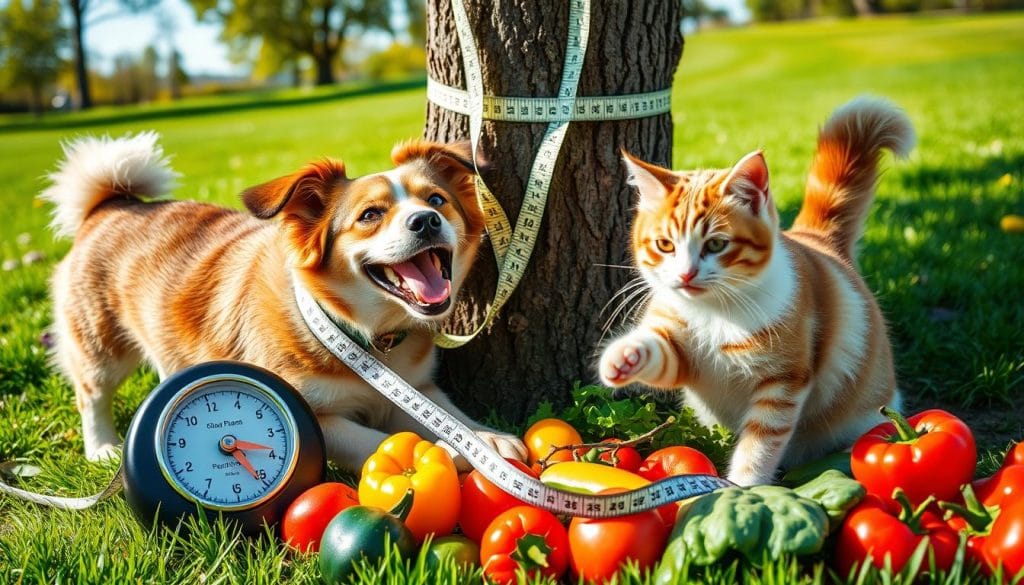
Creating a weight management plan for pets needs discipline and routine. Feed them at set times to control calories. Add fun activities to their day to keep them active and burn calories.
Always talk to your vet to make a plan that fits your pet. They can guide you on the best food, portions, and exercise. By following these steps, you’ll help your pet stay healthy for a long time.
Effective Pet Weight Loss Strategies
Helping your furry friend reach their ideal weight needs a smart plan. Pet weight loss is easier with structured programs made by experts.
Start with a slow pet weight loss plan. Avoid quick weight loss, which can be bad. Instead, aim for a slow, steady loss that fits your pet’s health needs. Regular weigh-ins and diet and exercise tweaks are key to success.
Getting a vet’s help can make a big difference. They offer personalized advice, track your pet’s progress, and adjust the plan as needed. Their knowledge ensures your pet’s weight loss is safe and works.
Creating a pet weight loss plan at home means good food and exercise. Choose high-quality, balanced diets and the right portion sizes. Add daily exercise that fits your pet’s breed and health.
Interactive play, walks, and specific exercises can help your pet lose weight. By using these strategies, you can help your pet get a healthier weight and live better.
Quick Recommendation: Our blog is filled with tips and information on keeping your dog healthy and happy. If you are interested in natural and holistic approaches to wellness, click here to see our #1 recommendation!
Balancing Pet Health and Nutrition
Creating a balanced pet diet is key to keeping your pet healthy and avoiding weight gain. Start by mixing different, nutrient-rich foods that meet your pet’s nutritional requirements for pets. This variety ensures they get all the vitamins and minerals they need and keeps their meals exciting.
Adding pet health supplements can be helpful for pets with special health needs. But, always talk to a vet before adding new supplements to their diet. They can tell you which supplements are right and how to give them.
It’s also important to balance treats with regular food. Treats should only be 10% of your pet’s daily calories to prevent weight gain. Choose healthier treats that your pets will love just as much.
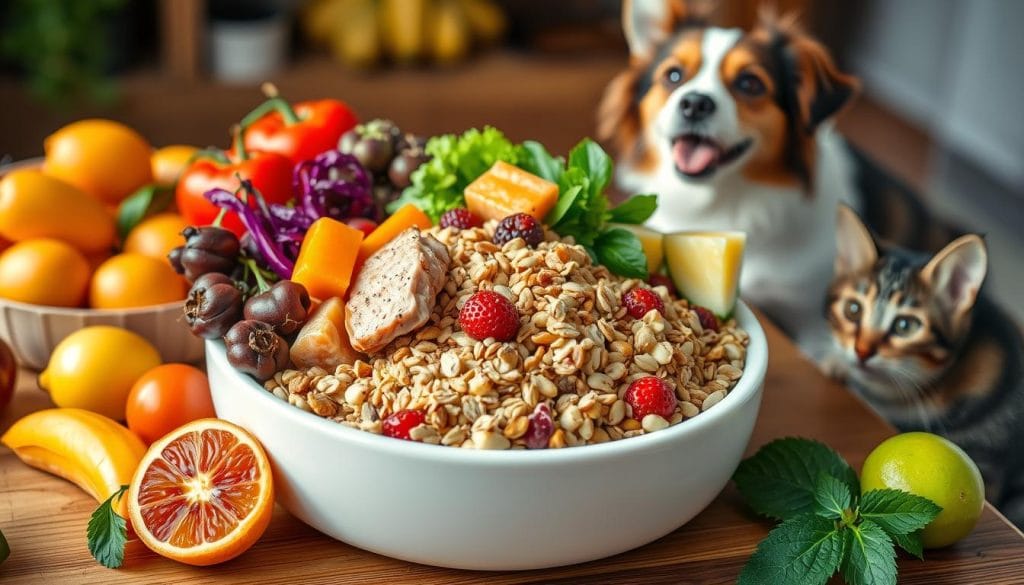
Every pet is different, and their nutritional needs vary. Regular vet visits help keep an eye on their health and adjust their diet if needed. By focusing on a balanced pet diet and understanding their nutritional requirements for pets, you can keep your pet happy and healthy for many years.
Maintaining Your Pet’s Ideal Weight
Keeping your pet at the right weight is key for their health. Regular vet visits are important to check on their health. It’s also crucial to keep their diet and exercise routine consistent.
Watching for weight changes in your pet is important. Changes in their life, like aging or activity level, can affect their weight. You might need to adjust their diet and exercise to keep their weight stable.
Feeding your pet a balanced diet and regular exercise helps keep their weight in check. Regular weight checks with your vet can catch any weight issues early. By following these tips, you can help your pet live a long and healthy life.
Monitoring Your Pet’s Weight Regularly
It’s crucial to watch your pet’s weight for their health. By tracking their weight, you can catch big changes early. This lets you take steps to help them.
Using a pet weight chart makes tracking easy. It shows your pet’s weight history. This makes it simple to see patterns and adjust their diet and exercise.
For accurate tracking, weigh your pet at the same time each month. This way, you avoid daily changes. Regular weigh-ins help prevent obesity and health issues.

Having a pet weight chart is also good for talking to your vet. It gives a clear record of weight changes. This helps spot health problems early.
Being proactive in pet health is key. Regular weight tracking and a pet weight chart are essential. They help keep your pet healthy and happy.
Behavioral Changes and Weight Management
Understanding how pet behavior affects their weight is key for pet owners. Your pet’s habits and routines play a big role in their weight. By recognizing this, you can help them stay at a healthy weight.
If your pet shows signs of anxiety or boredom, they might eat too much or act out. Changing their lifestyle with more play, mental games, and exercise can help. Also, taking them for regular walks improves their health and happiness.
Studies show that pets with better behavior through training and toys can stay healthier. Changing their environment and daily life can greatly impact their weight. Even small changes can make a big difference in their health and happiness.
Preventing Weight Gain After Losing It
After your pet has lost weight, it’s key to keep them healthy. Focus on sustaining pet weight loss for their long-term pet health. Keep their diet the same, with portion-controlled meals and balanced nutrition.
Regular exercise is also vital in preventing pet weight relapse. Make sure your pet gets daily walks, playtime, or agility training. This burns calories and keeps them happy and mentally sharp.
It’s important to watch your pet’s weight closely. Weigh them often and note any changes. This lets you adjust their diet or exercise if needed.
Be careful with treats and snacks. Choose low-calorie options and don’t overfeed. Healthy treats like carrot sticks are great for long-term pet health.
Regular vet visits are also crucial. Your vet can give advice and spot health issues early. By following these tips, you’ll help your pet stay healthy and happy.
Conclusion
Keeping your pet at a healthy weight is a journey, not a quick fix. It’s about recognizing obesity signs, feeding them right, and making sure they get enough exercise. These steps are crucial for your pet’s well-being and happiness.
By making sure your pet eats well and moves enough, you can help them stay at a good weight. Regular vet visits and watching their health closely are key. Don’t forget, changing their habits can also boost their health.
It takes hard work and commitment to keep your pet healthy and full of energy. Aim for a complete approach to their health, focusing on a balanced lifestyle and careful care. With these efforts, your pet will stay happy and healthy for many years.
Quick Recommendation: Our blog is filled with tips and information on keeping your dog healthy and happy. If you are interested in natural and holistic approaches to wellness, click here to see our #1 recommendation!