

Is your furry friend having trouble with their digestion? Many pet owners deal with this issue. The good news is that natural remedies can help. They are safe and effective for your pet’s health.
By learning about natural solutions, you can help your pet feel better. This includes probiotics and herbal supplements. These options support your pet’s health gently and without harsh side effects.
Let’s explore how to naturally improve your pet’s digestion. This journey will help your beloved companion feel better.
Quick Recommendation: Our blog is filled with tips and information on keeping your dog healthy and happy. If you are interested in natural and holistic approaches to wellness, click here to see our #1 recommendation!
Understanding Pet Digestive Issues
As a pet owner, it’s important to know about common digestive problems. These include diarrhea, constipation, and vomiting. These issues can come from many things like diet changes, stress, or infections. Knowing about these can help you keep your pet’s digestive system healthy.
Diarrhea is a common problem in pets, often caused by sudden diet changes or eating something bad. Constipation can happen if your pet doesn’t get enough fiber, is dehydrated, or has a medical issue. Vomiting can mean anything from a small upset stomach to a serious problem like an infection or eating something toxic.
It’s key to recognize the signs of these issues. If your pet keeps vomiting or has diarrhea, eats less, or seems uncomfortable, see a vet. Knowing when to go to the vet can really help your pet’s health.
A healthy digestive system is crucial for your pet’s happiness and health. Giving the right remedies and a balanced diet can stop many digestive problems. By being careful and proactive, you can keep your pet happy and healthy.
Holistic Pet Care Approaches
Holistic pet care is a complete solution for your pet’s digestive health. It focuses on natural ways to keep your pet healthy. This includes changing their diet, using herbal remedies, and taking preventive steps.

This method looks at the root causes of digestive problems, not just the symptoms. It often leads to better, lasting results. Changing your pet’s diet is key, making sure they get the nutrients they need without harmful additives.
Herbal therapy uses natural remedies to ease digestive issues and boost gut health. Preventive care is also crucial. Regular health checks and adjustments help prevent serious problems. Using natural solutions is a gentle yet effective way to keep your pet’s digestive system healthy and improve their life quality.
Probiotics for Pet Gut Health
Probiotics are good bacteria that keep your pet’s digestive system healthy. They help balance the gut’s bacteria, preventing digestive problems and improving how your pet absorbs nutrients. You can find probiotics in powders, capsules, and some pet foods.
Lactobacillus and Bifidobacterium are popular probiotics for pets. They boost gut health, reduce inflammation, and prevent diarrhea. They also support your pet’s immune system. Saccharomyces boulardii is good for pets with antibiotic diarrhea.
When picking probiotic supplements, look for ones with many strains and live bacteria. Brands like Purina and Nutramax make high-quality pet probiotics. Keep the supplement in the right storage to keep it working well.
You can add probiotics to your pet’s food in different ways. Mix the supplement into their regular meals or use probiotic-rich pet foods. Start slowly and watch for any bad reactions. Always talk to your vet to find the right probiotic for your pet.
Herbal Supplements for Pets
Adding herbal supplements to your pet’s routine can be very beneficial. Many herbs can calm an upset stomach, help with nutrient absorption, and boost gut health.

Ginger is a great choice because it fights inflammation and nausea. A little ginger in your pet’s food can ease indigestion and motion sickness. Peppermint is also excellent, as it cuts down on gas and discomfort, helping with digestion.
Slippery elm is another good option. It forms a protective layer in the stomach and intestines, which is great for pets with sensitive stomachs.
Before giving your pet herbal supplements, always talk to your vet. They can help with safety and the right amount. Choose high-quality brands that focus on pet supplements. Reading labels and reviews helps find the best fit for your pet’s needs.
Using these herbs can really help your pet’s digestion. It can make their life happier and healthier.
Home Remedies for Pet Digestion
If your furry friend is feeling a bit off, there are simple ways to help. Start by making some changes to their diet. A good choice is boiled chicken and rice. This combo is easy on the stomach and can help calm it down.
Adding natural fibers like canned pumpkin to their food can also help. Pumpkin is full of fiber, which can make digestion smoother. Just make sure it’s plain pumpkin, without any added sugars or spices.
Before trying these remedies, it’s important to talk to your vet. Even natural solutions can sometimes cause problems. Your vet can give you the best advice to keep your pet safe and healthy.
Quick Recommendation: Our blog is filled with tips and information on keeping your dog healthy and happy. If you are interested in natural and holistic approaches to wellness, click here to see our #1 recommendation!
Natural Solutions for Pet Digestive Health
Keeping your pets’ digestive health in check is all about diet, supplements, and care. A balanced diet tailored to your pet’s needs can help a lot. Choose foods without artificial stuff and full of fiber. Mixing high-quality pet foods with homemade meals adds variety and nutrients.
Probiotics and herbal supplements are key too. Probiotics, as mentioned before, keep the gut healthy. Herbal supplements, like ginger and chamomile, soothe the stomach and improve digestion.
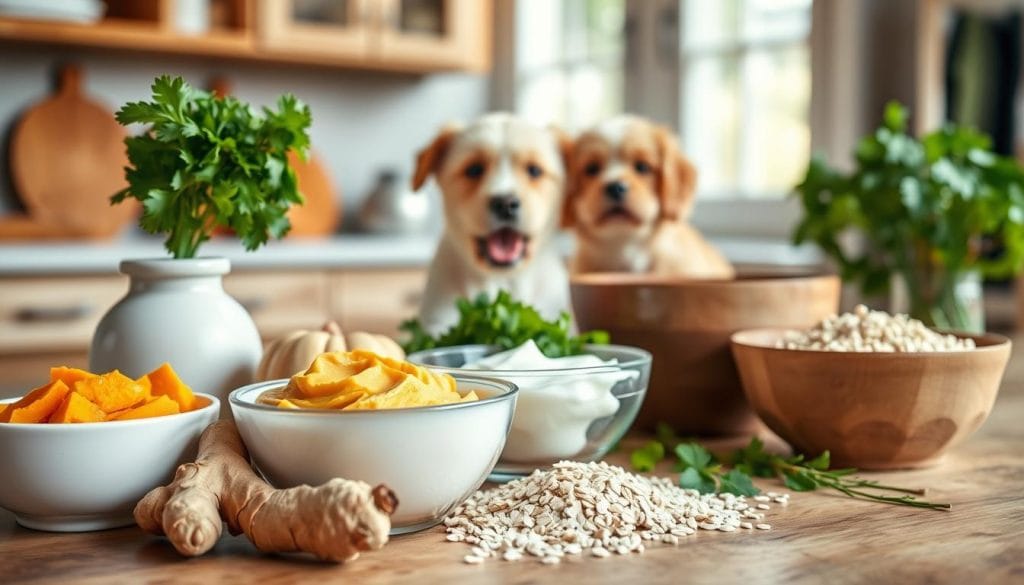
Don’t forget about preventive care. Regular vet visits and watching your pet’s digestion closely are important. Look out for signs of digestive trouble, like tiredness or changes in appetite.
For long-term health, keep your pet hydrated and feed them regularly. Clean water and exercise are crucial. These steps can make your pet happier and healthier.
Hydration: A Key Factor
Keeping your pet hydrated is very important, especially when they have digestive issues. Water helps break down food and absorb nutrients better, making digestion smoother. It’s key to watch how much water your pet drinks to keep them hydrated. Dehydration can make digestive problems worse.
Wondering how to get your pet to drink more water? Try changing their water often and using a pet water fountain. The moving water can make them more interested in drinking.
Adding moisture-rich foods to their diet can also help. Wet foods, broths, or even wet dry foods can increase hydration. Look out for signs of dehydration like dry gums, less flexible skin, and tiredness.
Knowing how hydration for pet health affects digestion is crucial. Well-hydrated pets digest better, which can lower the risk of constipation or bloating. Keep an eye on your pet’s water intake for better digestion.
Special Diets for Sensitive Stomachs
Managing your pet’s gastrointestinal health is key. Special diets for sensitive stomachs are essential. These diets are made to help pets with digestive issues.
Introducing your pet to a new diet should be slow. Start by mixing a little of the new diet with their current food. Gradually increase the new diet over a week. This helps their digestive system adjust smoothly.

Hypoallergenic and limited-ingredient diets are great for pets with sensitive stomachs. They use new proteins and carbs, lowering allergy risks. Keeping a regular feeding schedule also helps their digestive health.
Choosing special diets for sensitive stomachs keeps your pet happy and healthy. Working with your vet to find the right diet is crucial. It can greatly improve their digestive health.
Exercise and Its Impact on Digestion
Regular exercise is key for a healthy digestive system in pets. Physical activity boosts their gut health. It makes digestion smoother and lowers constipation risks.
Different pets benefit from various exercises. Small dogs do well with short walks or fetch. Larger dogs need longer walks or agility training.
Cats enjoy interactive toys or laser pointers. These activities keep their digestive systems healthy. They also keep pets mentally sharp.
Adding exercise to your pet’s routine cuts down on digestive problems. Regular movement stops bloating and gas. It keeps digestion efficient.
Exercise is vital for your pet’s digestive health. Tailoring workouts to their size and breed keeps them healthy.
Conclusion
Understanding and naturally addressing your pet’s digestive issues is key to their health. Recognizing signs of discomfort helps you act fast. This prevents small problems from becoming big health issues.
Using natural remedies like probiotics and herbal supplements is a great way to care for your pet. These methods help you take a holistic approach to their health. This means looking at their whole well-being, not just their digestive system.
Adding proper hydration, special diets, and exercise to your pet care routine is also important. These steps can greatly improve their digestive health. They help make your pet’s life balanced and happy.
It’s crucial to keep an eye on your pet’s digestive health. Use the tips from this article to make smart choices. This way, you can help your pet live a healthy, active life.
But, if your pet’s digestive problems don’t go away or get worse, don’t wait. Get advice from a vet. They can give you specific help and treatments that fit your pet’s needs. Combining natural remedies with vet advice ensures your pet stays healthy and happy.
Quick Recommendation: Our blog is filled with tips and information on keeping your dog healthy and happy. If you are interested in natural and holistic approaches to wellness, click here to see our #1 recommendation!
BTW: If you are looking for tips and tricks on dog training, check out our friends at K9 Training Hub