
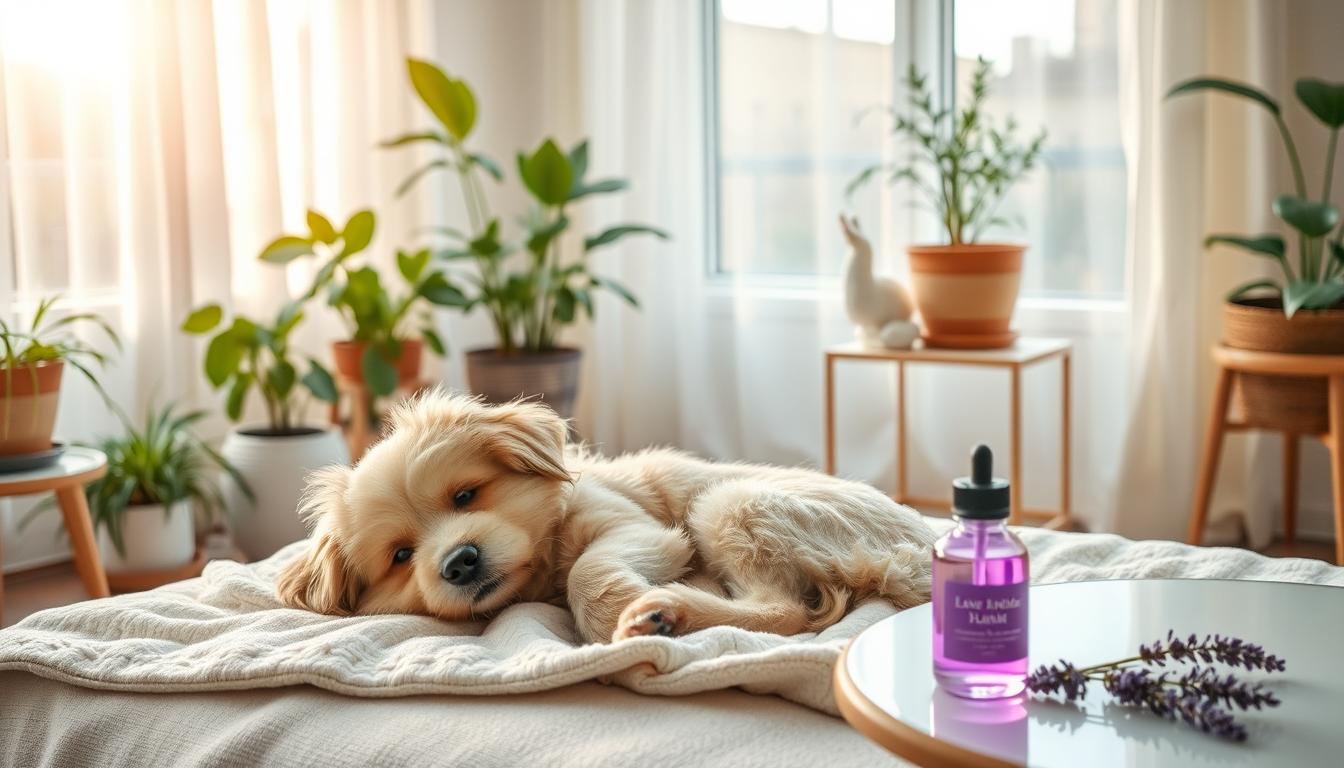
Pet anxiety is a common problem many pet owners face. It’s important to know how to help your pet feel better naturally. We’ll look at different ways to calm your pet in this article.
Studies show that about 40% of dogs and cats get anxious at some point. So, finding ways to help them is key for their health and your peace of mind.
Vets often suggest natural solutions because they are kinder to pets than medicines. We can make our pets feel better by creating a calm space and using supplements. We’ll explore these methods in the article, giving you tips to soothe your pet.
Quick Recommendation: Our blog is filled with tips and information on keeping your dog healthy and happy. If you are interested in natural and holistic approaches to wellness, click here to see our #1 recommendation!
Understanding Pet Anxiety
Pet anxiety is a common problem that many pets face. It can affect dogs, cats, and other animals. Knowing the signs of pet anxiety is key to helping them feel better.
Experts say pet anxiety is a behavioral disorder. Pets show stress or fear when they see certain things. Signs include too much barking, destructive actions, and changes in how much they eat.
Experts like those at the American Kennel Club say pets get anxious for many reasons. They might feel anxious when left alone, scared by loud noises, or upset by changes in their routine. Spotting these signs early is important for helping pets feel better and avoiding bigger problems.
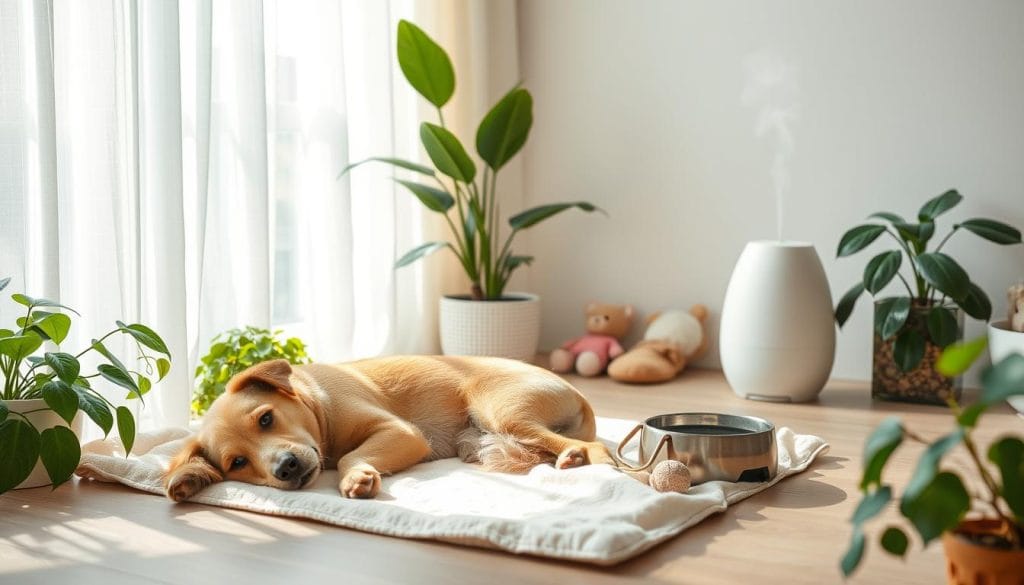
Pet anxiety works in ways similar to human anxiety but has its own twists. Unlike people, pets don’t talk about their feelings. They show anxiety through how they act or physical signs. These signs can really hurt a pet’s health and lead to long-term problems if not handled right.
So, managing pet anxiety is more than just fixing their behavior. It’s also about keeping their emotional health in check.
Creating a Calm Environment
Creating a calm environment is a key holistic solution for pet anxiety. Animal behaviorists stress the need for a stress-free space. They say environmental factors greatly affect your pet’s mental health.
Think about adding relaxation techniques for pets to your home. Setting up cozy, quiet spots for your pet is a good idea. Use soft bedding, gentle lighting, and calming scents like lavender to help them relax.
Changing your home for your pet doesn’t have to be hard or expensive. Simple DIY tips can make a big difference. For example, rearranging furniture for safe hiding spots or using soundproofing materials to reduce noise can help a lot.
Studies show even small changes can make a big difference. Families who tried these techniques saw their pets less anxious and happier.
By adopting these holistic solutions, you create a nurturing and peaceful home for your pet. Focusing on relaxation techniques makes their space a calm and secure sanctuary.
Exercise and Mental Stimulation
Getting your pet to exercise regularly is a great way to reduce stress. Whether it’s a dog, cat, or another pet, make sure they get enough exercise. Most dogs need 30 minutes to 2 hours of activity each day.
This keeps them fit and sharpens their mind. It’s key in helping pets feel less anxious.
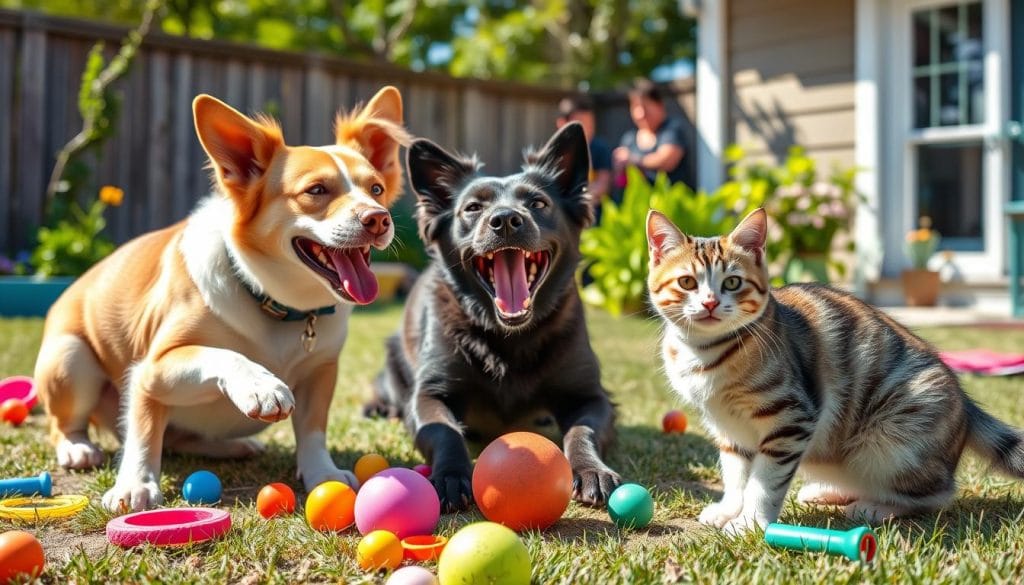
Mental games are just as vital. Using interactive toys or playing games that challenge their mind helps a lot. Experts say activities like puzzle feeders or hide and seek are great.
They not only keep pets entertained but also lower their stress. This shows how crucial play is in making pets calm and happy.
Calming Techniques for Pets
Pet massage is a great way to help your pets relax. Experts say gentle kneading and stroking can ease tension. Use your fingertips to softly press along their spine and muscles, making them feel calm and happy.
Music therapy is also effective. Studies show that classical music and pet playlists can calm pets. Playing soft music can make a peaceful space, helping your pet relax.
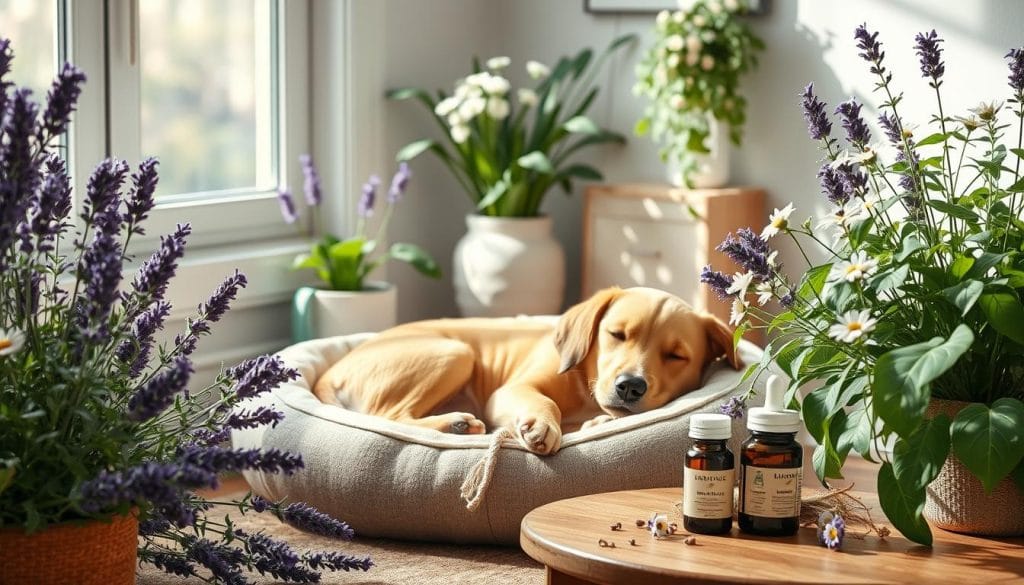
Aromatherapy is another good option. Essential oils like lavender and chamomile can make a calm space. But, always check with a vet first, as some oils can harm pets. Using these oils in your pet’s area can help reduce stress.
Many pet owners have seen big improvements with these methods. They share stories of better behavior and mood in their pets. By using these techniques together, you can help your pet live a happier, healthier life.
Natural Remedies for Pet Anxiety
Looking for ways to calm your pet’s anxiety? Natural remedies can be very helpful. Herbs like chamomile, valerian, and lavender are great for pets. They help soothe nervousness and promote relaxation.
Chamomile, a favorite tea for humans, is also good for pets. It’s safe and gentle when used right. Vets say it helps calm dogs and cats, easing their stress and anxiety.
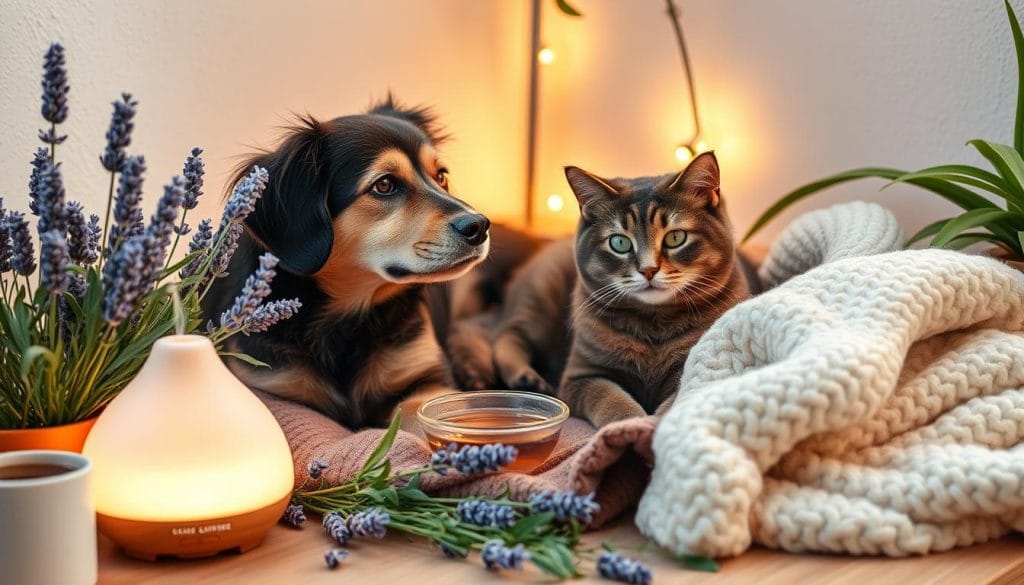
Lavender is also known for its calming effects. Its nice smell can help reduce anxiety. Adding small amounts of these herbs to your pet’s food or using essential oils can make a big difference.
Studies and vets agree that natural remedies can help your pet. Many pet owners have seen their pets feel less stressed and anxious. Trying these herbs might help your pet relax naturally.
Stress-Reducing Supplements for Pets
Managing your pet’s anxiety can be tough. But, stress-reducing supplements for pets can really help. These supplements come from vet-authored articles and are known to ease stress and anxiety symptoms. They often include L-Theanine, which is calming.
Studies back up the effectiveness of these supplements. They show that ingredients like Valerian Root and Chamomile can lessen anxiety in dogs and cats. Omega-3 fatty acids are also praised for their mood-stabilizing benefits.
Many pet owners have shared good experiences with these supplements. Brands like Zesty Paws and VETRISCIENCE are often recommended. But, always talk to your vet before adding new supplements to your pet’s diet. This ensures they are safe and right for your pet.
Quick Recommendation: Our blog is filled with tips and information on keeping your dog healthy and happy. If you are interested in natural and holistic approaches to wellness, click here to see our #1 recommendation!
Diet and Nutrition
The food your pet eats can really change how they act. Studies show that what pets eat affects their mood, especially if they’re anxious. A good diet does more than just fill their belly; it helps with their behavior too.
Adding foods high in omega-3 fatty acids is a simple way to help anxious pets. These fats help reduce inflammation and make pets feel more relaxed. Fish oil or chia seeds are good choices.
Proteins are also key. They give pets the amino acids needed for mood-regulating neurotransmitters like serotonin. Without enough protein, pets might not feel their best.
Consider adding L-theanine or tryptophan supplements to their diet. These can help calm pets down. But, always talk to a vet nutritionist first. They can make a diet plan just for your pet.
Behavioral Training Techniques
Behavioral training is a strong tool for pet anxiety. Positive reinforcement is highly recommended by experts. It helps your pet link positive outcomes to stressful situations, lowering their anxiety.
Using reward-based systems is crucial. Studies show that consistent and patient training leads to big changes. Many pets see a big drop in anxiety with positive reinforcement.
Real-life success stories are inspiring. Many pets become calm and confident with the right training. By using behavioral training, you can make your pet feel safe and happy. Remember, patience and understanding are key to helping your pet.
Conclusion
Managing pet anxiety is a journey that needs understanding, patience, and a commitment to holistic pet care. Recognizing the signs of anxiety in your pet is the first step. Taking proactive steps helps a lot in their mental well-being.
Creating a calm environment and giving them enough exercise and mental stimulation helps. Using calming techniques adds to this supportive atmosphere.
Natural remedies and stress-reducing supplements can also help. They offer comfort without harsh chemicals. A balanced diet is also key, as it affects their stress levels.
Behavioral training techniques are crucial too. They help your pet not just manage anxiety but thrive.
Experts say a holistic pet care approach is best. It balances physical, mental, and emotional health. The American Veterinary Medical Association stresses the importance of long-term commitment to pet mental health.
By following these guidelines, you can ensure a happier, healthier future for your pet.
Quick Recommendation: Our blog is filled with tips and information on keeping your dog healthy and happy. If you are interested in natural and holistic approaches to wellness, click here to see our #1 recommendation!
BTW: If you are looking for tips and tricks on dog training, check out our friends at K9 Training Hub