
Your pets are like family to you. They can get allergies just like people do. Knowing how to spot and treat pet allergies is key to keeping them healthy and happy. Spotting allergy symptoms early can really help your pet’s life.
Pet allergies can show up in many ways. This includes constant scratching, sneezing, and tummy troubles. Knowing these signs and how to manage them can change your pet’s life. This guide will help you understand and tackle your pet’s allergy issues.
Quick Recommendation: Our blog is filled with tips and information on keeping your dog healthy and happy. If you are interested in natural and holistic approaches to wellness, click here to see our #1 recommendation!
Understanding Allergies in Pets
Understanding allergies in pets is key. Their immune systems react to allergens in unique ways. Pets can have different allergies, like food allergies and environmental allergies. These allergies cause various symptoms, affecting pets differently.
Pet food allergies happen when pets react to certain ingredients. Common allergens include beef, dairy, chicken, and wheat. When pets have these allergies, their immune systems see these proteins as threats. This leads to symptoms like itching, digestive issues, and ear infections.
Environmental allergies, on the other hand, come from allergens in their surroundings. These can be pollen, mold, dust mites, or chemicals in cleaning products or pesticides. Pets with these allergies might scratch a lot, sneeze, or have watery eyes.
Knowing the difference between food and environmental allergies is important. It helps you and your vet find the best way to keep your pet healthy and happy.
Recognizing Allergic Reactions
If your pet is scratching a lot or acting strangely, it might not just be an itch. It could be a sign of pet skin allergies. Spotting these symptoms early can greatly improve your pet’s comfort and health.
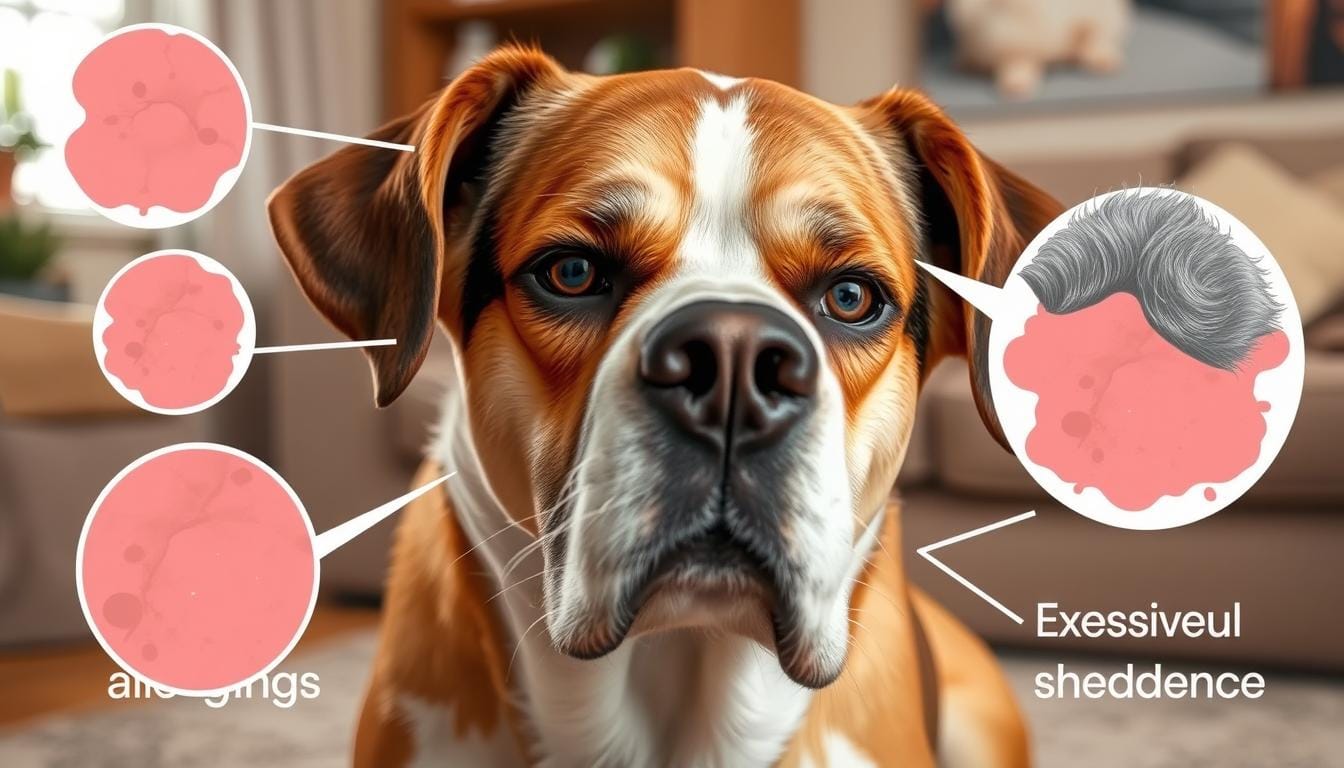
Excessive itching is a common sign of allergies in pets. You might see your pet scratching, licking, or biting their skin a lot. This can cause redness and swelling, especially around the paws, ears, and face. Hair loss is another sign, often due to constant scratching.
Digestive problems are also a sign of allergies. If your pet is vomiting or having diarrhea a lot, allergies might be the cause. These issues can be mistaken for other health problems, so it’s crucial to consider allergies if they keep happening.
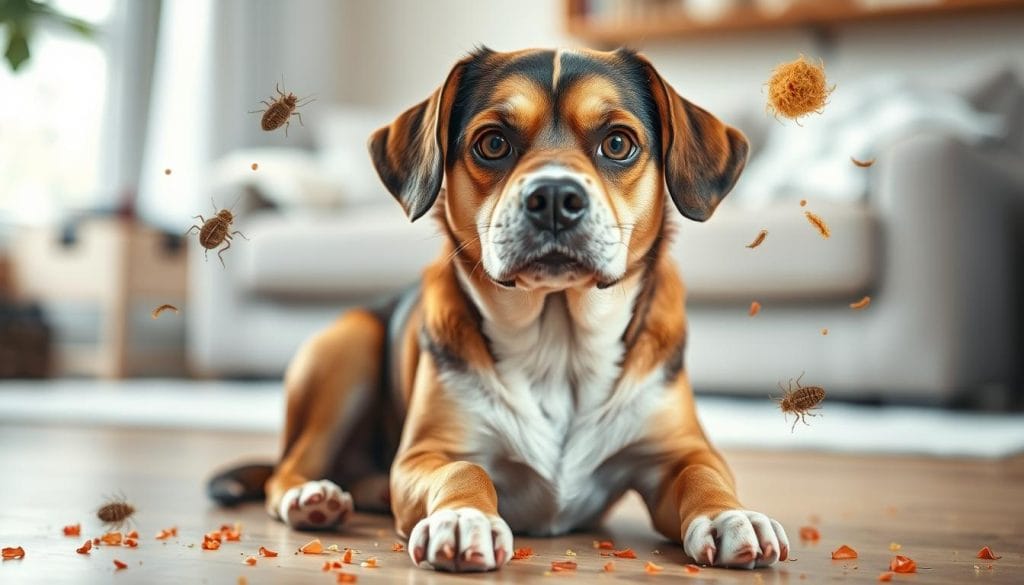
Respiratory issues like sneezing, coughing, and wheezing are also signs of allergies. While they can have many causes, they often point to allergies if they happen a lot.
It’s important to know the difference between normal pet behavior and signs of allergies. Sometimes, pets scratch due to a temporary itch. But if the scratching is frequent and severe, it’s time to see a vet. They can figure out if it’s allergies or something else.
Common Allergens for Pets
Pets can get allergies just like people do. Food allergies are common in pets. Ingredients like beef, chicken, dairy, or soy can cause problems. These can lead to digestive issues and skin problems.
Environmental factors also cause allergies. Pollen from trees, grasses, and weeds can make pets’ skin itchy and inflamed. Dust mites, molds, and some household cleaners can affect their breathing and skin too.
It’s important to know what causes allergies in pets. Watching your pet closely and talking to your vet can help. Cleaning regularly can reduce indoor allergens. Keeping pets indoors during high pollen times can help with outdoor allergens.
Diagnosing Allergies in Your Pet
Getting to know your pet’s discomfort starts with finding the right diagnosis. Pet allergy testing is key. Vets use tests like skin patch tests or blood tests to find out what’s causing the problem. Each test shows different things about your pet’s allergies.
With a skin patch test, a small skin area is tested with possible allergens. This shows if something causes skin issues. Blood tests, on the other hand, check how the immune system reacts to different allergens. They help find out what’s in the environment or food that’s causing trouble.
After testing, you’ll get a detailed report on what’s making your pet sick. This report is crucial for creating a treatment plan just for your pet. Treatments might include special diets, medicines, or changes in their environment to avoid allergens.
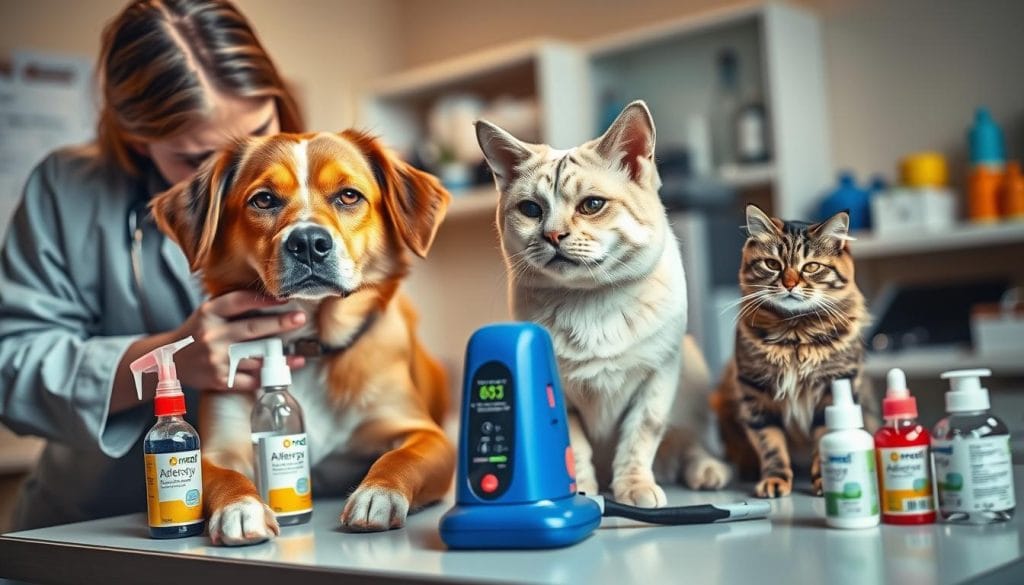
Knowing how allergies are diagnosed helps you support your pet better. The right treatment starts with a clear diagnosis. This lets you take steps to make your pet more comfortable and improve their life.
Treatment Options for Pet Allergies
There are many ways to treat pet allergies, each suited for different needs. Medicines like antihistamines can quickly ease symptoms by stopping histamine release. Steroids also help by reducing swelling and easing severe reactions.
Immunotherapy is another good choice. It involves giving your pet small amounts of the allergen to build tolerance. This is great for long-term allergies that medicines can’t fully manage. Your vet might suggest injections or drops for this treatment.
Choosing the best treatment depends on several things. These include how bad the symptoms are, the type of allergen, and your pet’s health. Always talk to your vet to create a plan that works best for your pet.
Home Remedies to Alleviate Symptoms
If your pet shows signs of allergies, you might want to try home remedies first. There are many ways to ease pet allergy symptoms without a vet visit. One good method is to bathe your pet regularly. This keeps them clean and removes allergens from their fur and skin.
Using a hypoallergenic shampoo is especially helpful. It soothes your pet’s irritated skin.
Adding natural supplements to your pet’s diet is another good idea. Omega-3 fatty acids, found in fish oil, can reduce inflammation and improve skin health. Probiotics boost your pet’s immune system, which may lower allergy symptoms.
Changing your home environment can also help. Use air purifiers to remove airborne allergens. Make sure your pet’s bedding is washed in hot water to kill dust mites. Vacuuming with a HEPA filter regularly can also reduce allergens in your home.
By trying these home remedies, you can help ease your pet’s allergy symptoms. These methods are not only effective but also promote your pet’s overall health.
Quick Recommendation: Our blog is filled with tips and information on keeping your dog healthy and happy. If you are interested in natural and holistic approaches to wellness, click here to see our #1 recommendation!
Preventing Allergies in Your Pet
To prevent allergies in your pet, start by understanding how to limit their exposure to common allergens. Regular grooming is key. By bathing and brushing your pet often, you can cut down on dust, pollen, and dander on their fur.
Diet also plays a big role. Feed your pet a balanced diet with omega-3 fatty acids from fish oils and flaxseed. This boosts their immune system and lessens inflammation. Choose pet foods that support skin health and reduce allergies.
Keeping your home clean is also vital for pet environmental allergies. Vacuum often, use air purifiers, and wash your pet’s bedding. Also, opt for hypoallergenic cleaning products to avoid harsh chemicals that can trigger allergies.
Don’t forget to take your pet to the vet regularly. Early detection of allergy triggers is crucial. It helps keep your pet happy and healthy.
Lifestyle Changes for Allergic Pets
Managing your pet’s allergies often means making lifestyle changes. These changes can greatly reduce their allergic reactions. One key step is to change their food to hypoallergenic options. This can help a lot with symptoms from common food allergens.

Improving your pet’s sleeping area is also important. Using hypoallergenic bedding can cut down on allergens like dust mites and pollen. Washing pet bedding in hot water regularly can also get rid of allergens.
Keeping the air clean in your home is also crucial. Air purifiers can remove airborne allergens, making a safer space for your pet. They’re especially helpful in homes with many pets or high pollen areas.
By making these lifestyle changes, you improve your pet’s health and create a healthier home. Managing your pet’s allergy triggers is a big step towards their happiness and well-being.
Educating Yourself About Pet Allergies
Learning about your pet’s allergies can greatly improve their life. It’s important to keep up with the latest in pet allergy education. This way, you can handle common triggers and pet respiratory allergies well.
Spotting signs of respiratory problems in pets is crucial. Regular vet visits and staying current with new allergy treatments help a lot. Remember, your pet depends on you for their health, so learning is key to caring for them.
Make learning a regular part of your routine. Use vet advice, pet care blogs, or health apps to grow your knowledge. This effort helps you face any allergy issues with care and understanding.
Addressing Allergies in Different Breeds
Managing pet allergy symptoms is key, and different breeds have unique sensitivities. Knowing how allergies vary among breeds helps you care for your pets better.
Some breeds, like Bulldogs and Retrievers, are more likely to have skin allergies. Spotting these symptoms early can greatly improve their comfort. Meanwhile, Poodles and some Terriers might not be as prone but can still have allergy issues.

Dealing with allergies in different breeds needs specific plans. Regular baths with special shampoos, changing their diet, and vet visits are important. These steps, based on your pet’s breed, can help reduce allergy symptoms.
Understanding your pet’s breed needs is crucial for their care. Always talk to your vet to create a plan that fits your pet’s breed and health.
What to Expect in Allergy Management
Managing your pet’s allergies takes time and effort. It often means using different treatments to help your pet feel better. Remember, it’s about controlling symptoms, not getting rid of them completely.
Regular vet visits are key to managing your pet’s allergies. Your vet can change treatments as needed. They might do skin tests, blood work, or adjust medications. Keeping a log of your pet’s symptoms and what might trigger them helps your vet too.
Your commitment is also vital. Stick to the treatment plan and make any lifestyle changes suggested by your vet. Watch for any changes in your pet’s health. With the right treatment and your care, your pet can live a happier, more comfortable life with allergies.
Quick Recommendation: Our blog is filled with tips and information on keeping your dog healthy and happy. If you are interested in natural and holistic approaches to wellness, click here to see our #1 recommendation!
BTW: If you are looking for tips and tricks on dog training, check out our friends at K9 Training Hub