
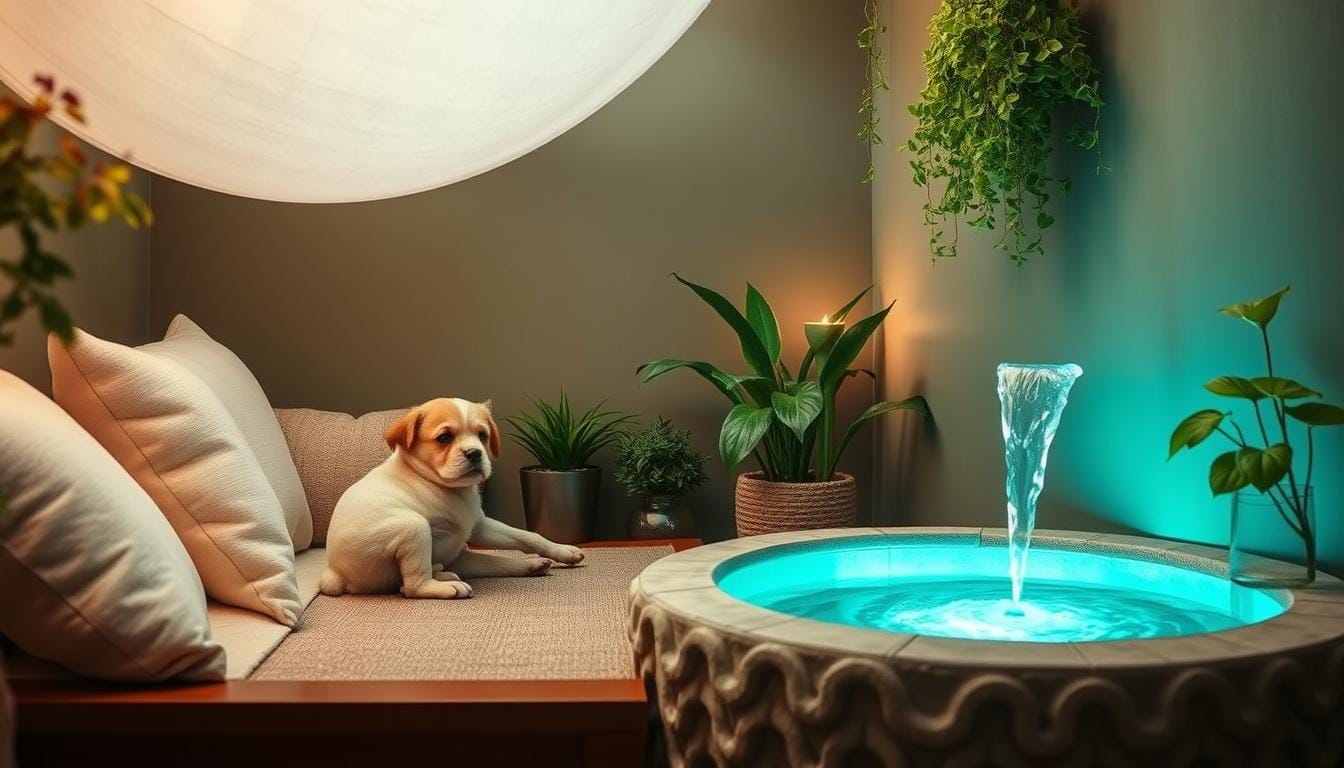
Just like humans, pets can feel stressed and anxious. This can happen when their environment or routine changes. It’s important to use good pet stress management strategies to keep them happy.
By making a soothing space for your pet, you can lower their anxiety. This helps them feel safe and comfortable. It’s all about creating a calm atmosphere for them.
Experts say a peaceful place is key to your pet’s happiness and health. There are many ways to help, like using calming products or sticking to a routine. We’ll look at these methods in more detail.
We’ll explore what causes stress in pets and how to make a space that meets their needs. This will help your pets feel better and more at ease.
Quick Recommendation: Our blog is filled with tips and information on keeping your dog healthy and happy. If you are interested in natural and holistic approaches to wellness, click here to see our #1 recommendation!
Understanding Your Pet’s Stress Triggers
Knowing what stresses your pet is key to a calm home. Pets, like us, can get anxious for many reasons. Spotting stressors like loud sounds, home changes, or feeling left out helps you support them better.
Look for signs your pet might be stressed. Changes in behavior, like barking too much or being aggressive, are signs. Also, if they eat less or sleep more, it could mean they’re anxious.
Experts say to watch your pet’s behavior closely. Spotting these small changes is crucial. If something seems wrong, it probably is. Taking action with good pet anxiety tips can really help their happiness.
Creating a Calming Environment for Your Pet: Tips and Tools
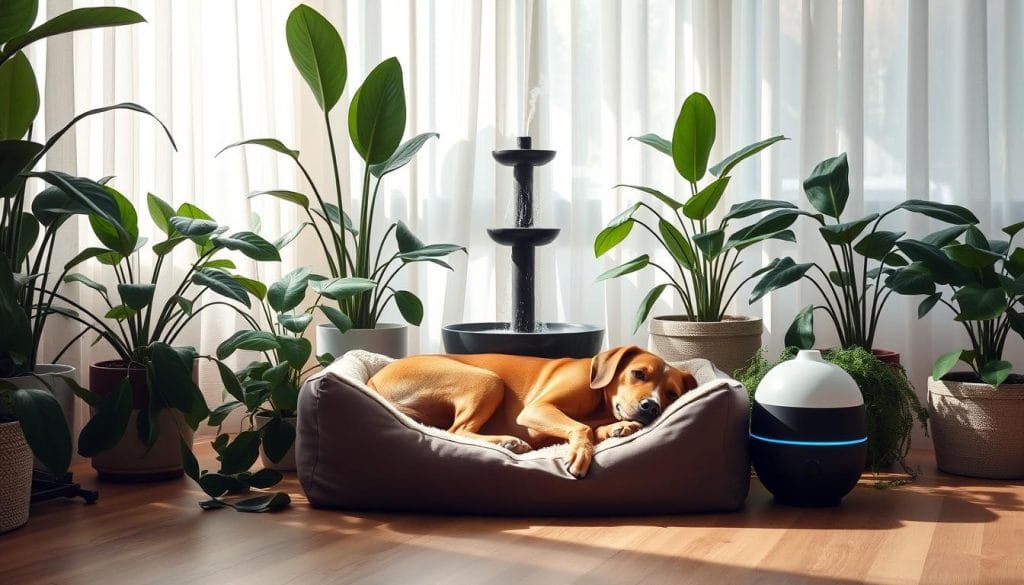
To make a stress-free pet environment, you need to use calming strategies. A pheromone diffuser is a great tool. It releases scents that calm your pet. Many pet owners also use soothing music for animals. This music helps create a peaceful atmosphere, easing anxiety.
Comfortable bedding is another key tip. A soft, supportive bed can greatly help keep your pet calm. Think about your home’s layout and design too. Soft lighting and quiet areas can make a big difference. They give your pet a safe place to relax when stressed.
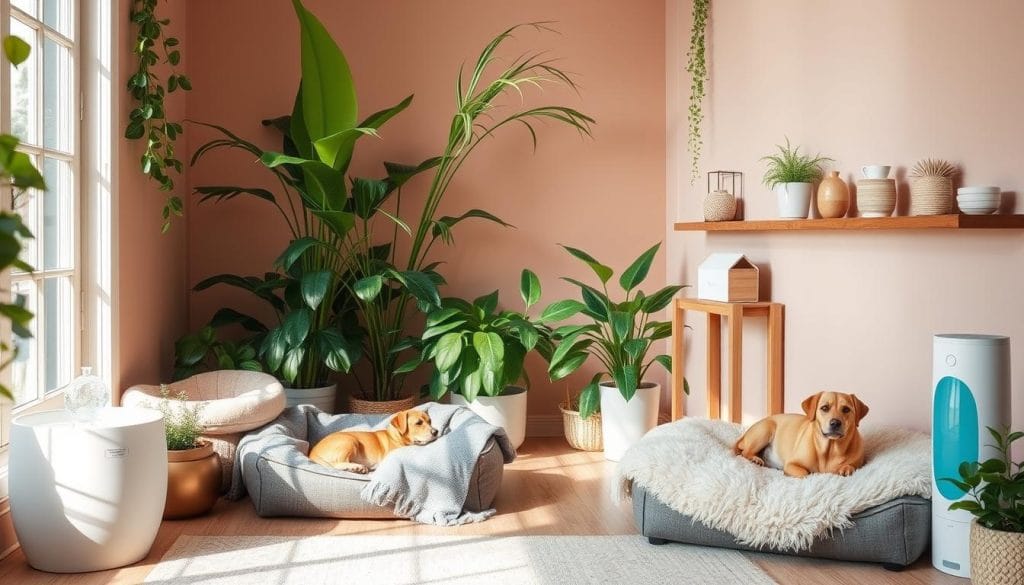
Calming strategies go beyond the physical space. A regular routine and regular interaction are important. With the right tools, you can make a calm environment for your pet. This improves their life and makes your home more peaceful.
Choosing the Right Calming Products
Choosing the right calming pet products starts with knowing your pet’s needs. Different pets respond to calming solutions in unique ways. For example, dogs might find comfort in weighted blankets, while cats and small dogs prefer anxiety wraps.
Think about what kind of anxiety your pet faces. Do they get stressed when you leave or when there’s loud noise? Brands like ThunderShirt and PetFusion offer solutions for various stressors. Also, look for vet-recommended products, as they often have positive feedback from pet owners.
Consider your pet’s size and breed when picking calming pet products. Heavier blankets might suit larger breeds better, while smaller pets might find them too much. Always choose products that are safe and effective, using non-toxic materials and tested for durability.
Designing a Serene Pet Space
Creating soothing pet spaces in your home is key for your furry friend’s happiness. The right colors can make a big difference. Soft, calming colors like pastel blues and greens create a peaceful spot.
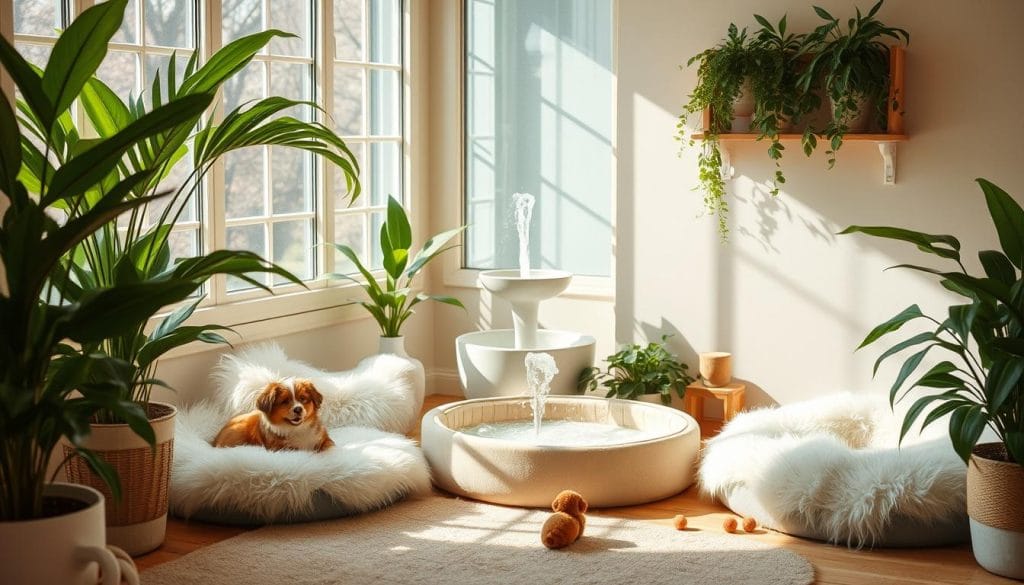
Adding plush toys and soft bedding makes the space cozy and inviting. Think about using wooden toys or organic beds for a pet-friendly touch. Keeping the space tidy is also important. A clean, organized area reduces stress and helps your pet relax.
Make sure this safe, secure spot is easy to get to and quiet. This way, your pet has a place to go when they’re stressed. It helps keep the peaceful atmosphere you’re trying to create.
Using Pet Relaxation Techniques
It’s important to help your pet relax to keep their environment stress-free. Massage therapy is a great way to do this. Use gentle, circular motions on areas like the neck and shoulders where they hold tension. This not only relaxes them but also strengthens your bond.
Controlled breathing exercises can also help. Watch your pet’s natural breathing and guide them to take slower, deeper breaths. This can greatly reduce anxiety and help them relax.
Aromatherapy is another excellent method. Essential oils like lavender and chamomile have calming effects. Make sure to diffuse these oils in your pet’s favorite relaxation spots to create a peaceful environment.
When introducing these techniques, start slow. Begin with short sessions and watch how your pet reacts. With patience and consistency, these methods can greatly improve your pet’s relaxation routine. This will help them feel more well and content.
Quick Recommendation: Our blog is filled with tips and information on keeping your dog healthy and happy. If you are interested in natural and holistic approaches to wellness, click here to see our #1 recommendation!
Implementing Routine and Consistency
Creating a stable home for your pet starts with a daily routine. A regular schedule for meals, walks, and playtime gives them security. This helps lower their anxiety.
Knowing when to expect meals, walks, and cuddles makes their day predictable and comforting. Reliable schedules meet their emotional and physical needs, even when you’re busy.
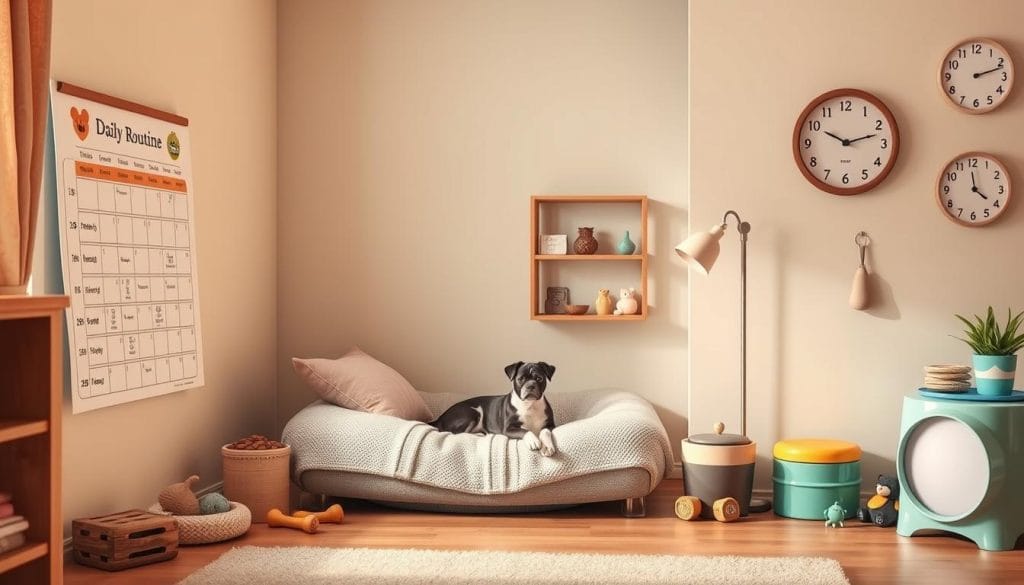
Keeping a routine might seem hard with a busy schedule, but it’s doable with planning. If your routine changes, consider a pet sitter or friend. They can keep your pet’s schedule on track, keeping them calm and less stressed.
These strategies not only keep your pet calm but also strengthen your bond. The effort in maintaining a routine will make your pet happy, secure, and content.
Special Tips for Managing Pet Anxiety
Dealing with pet anxiety can be tough, but there are ways to help. Start by figuring out what stresses your pet. Once you know, slowly introduce them to these things in a safe place. This helps them get used to it.
One key tip is to use stress management every day. Keep a regular schedule for meals, walks, and play. Pets like knowing what’s coming next, which helps them feel less anxious.
Pet therapy success stories show how well these methods work. Many pets feel much better after therapy and behavior changes. Talking to a vet behaviorist can give you specific ways to help your pet. They offer expert advice to make managing stress easier for both of you.
Natural and Holistic Approaches to Pet Calmness
Using natural and holistic pet care can make your pet’s life more peaceful. Herbal remedies like chamomile and valerian root are great for calming pets. You can give them to your pet in teas, tinctures, or capsules.
Acupuncture is another good option. It’s an ancient method that helps reduce anxiety and improve well-being. By focusing on certain points, it can help your pet relax. More and more vets are using it as part of alternative pet therapies.
Homeopathic treatments are also a natural way to calm pets. They use diluted natural substances to tackle emotional issues. Remedies like Arnica and Ignatia help pets feel less stressed. These treatments are safe and can be used alongside regular pet care.
Calming pet products can also help. Things like pheromone diffusers and calming beds make pets feel more at ease. They work well with natural therapies to make your pet even calmer.
Importance of Physical Activity and Play
It’s crucial to make sure your pet gets enough physical activity. This helps them release built-up energy. It also stops unwanted behaviors and makes them happier and calmer.
Playing with your pet is not just fun—it’s key for their mental health. Adding stress relieving exercises to their routine can lower anxiety. It also improves their life quality. Activities like fetch, walks, or interactive toys keep pets balanced and content.
Experts say the right exercise for pets depends on their breed and age. For example, a young Border Collie needs more active play than an older Shih Tzu. Tailoring activities to your pet’s needs ensures they enjoy their playtime more.
Understanding the importance of playtime and adding structured physical activity to your day is vital. It makes pets happier, healthier, and more relaxed. So, always make time for these moments to keep your furry friend happy and stress-free.
Conclusion
Creating a calm space for your pet is key to their happiness. We’ve looked at many ways to make your home peaceful for your pet. This includes understanding what stresses them and using the right calming aids.
Every pet is different, so what works for one might not work for another. Watching how your pet acts helps you know what they need to feel calm. Try out different methods, like relaxation techniques and natural remedies. If your pet’s anxiety doesn’t get better, talk to a vet or pet behaviorist.
A calm home is good for both you and your pet. It makes your life together better and happier. With effort and care, you can create a safe, loving space for your pet.
Quick Recommendation: Our blog is filled with tips and information on keeping your dog healthy and happy. If you are interested in natural and holistic approaches to wellness, click here to see our #1 recommendation!