

Many pet parents are now using natural solutions for their pets’ skin problems. These remedies are gentle and effective. They help with allergies, dry skin, and irritation, keeping pets healthy.
The trend towards natural pet care is growing. The American Pet Products Association says skin issues are common in pets. Natural remedies are safe and reliable for your pet’s skin health.
In this guide, you’ll learn about natural ways to solve skin issues. These methods help with dry skin and allergies. They show how important natural care is for a happy, healthy pet.
Quick Recommendation: Our blog is filled with tips and information on keeping your dog healthy and happy. If you are interested in natural and holistic approaches to wellness, click here to see our #1 recommendation!
Understanding Your Pet’s Skin Needs
Keeping your pet’s skin healthy is key. Pets have different skin types and needs based on their breed, age, and where they live. Spotting skin problems early can help avoid bigger issues and keep them healthy.
Pet skin has layers like the epidermis, dermis, and subcutis. These layers protect, regulate temperature, and sense the environment. Extreme weather or allergens can harm these layers, causing dryness or rashes.
Different breeds have unique skin needs. Bulldogs and Pugs need care for their skin folds to avoid infections. Dogs with thick coats, like Huskies, need regular grooming to prevent skin problems. Knowing these needs helps you care for your pet’s skin better.
Life stages also affect a pet’s skin. Puppies and kittens have sensitive skin that needs gentle care. Senior pets may have drier skin that needs moisturizing. Adjusting your care routine based on your pet’s age helps keep their skin healthy.
Diet is crucial for pet skin health, too. Omega-3 fatty acids keep skin and coats healthy. Talking to a vet about your pet’s diet can help improve their skin.
The environment also affects a pet’s skin. Pets in dry areas may need humidifiers and more moisturizing. Those in humid places might need regular baths to prevent bacterial growth. Adjusting to your pet’s environment helps keep their skin healthy.
Spotting and understanding your pet’s skin issues can greatly improve their life. With the right care, you can help your pet have healthy, comfortable skin at every stage of their life.
Natural Ingredients That Benefit Pet Skin
Caring for your pet’s skin doesn’t need harsh chemicals. Choose natural remedies that are gentle yet effective. Aloe vera is great for moisturizing and healing. It can soothe dry, irritated skin.
Coconut oil is another excellent choice. It keeps skin hydrated and fights off bacteria and fungi. Just a bit of coconut oil can ease itchiness or dryness.

Oatmeal baths are also popular for soothing pet skin. Ground oatmeal gently exfoliates and reduces inflammation. It’s perfect for managing skin issues. Try adding it to your pet’s bath for healthier, calmer skin.
Using these soothing ingredients in your pet skin care routine has many benefits. Always talk to a holistic vet or check scientific studies. This ensures your pet gets the best care and keeps their skin healthy.
Identifying Allergies in Your Pet
Spotting skin allergies in pets can be tough but is key for their health. Signs include a lot of scratching, red skin, hot spots, and constant licking. If you see these, look into what might be causing it.
Many things can cause allergies in pets, like pollen, dust mites, or mold. Also, some foods can be allergens. Try removing possible allergens to see if your pet gets better.
Getting advice from a vet is a good idea for skin allergies. They can suggest ways to care for your pet and help manage symptoms. Many pet owners have found success with expert advice and their own experiences.
Soothing Dry Skin Naturally
Dry skin in pets can be uncomfortable and itchy. Luckily, there are natural remedies you can try at home. A homemade oatmeal bath is a great option. Oatmeal soothes irritated skin and keeps it moist.
To make it, grind plain oatmeal into a fine powder. Mix it with warm water before bathing your pet.
Coconut oil is also good for moisturizing. A small amount can nourish and hydrate dry skin. It’s safe for most pets and has anti-inflammatory and antibacterial benefits. Just massage it gently into the skin and avoid using too much.
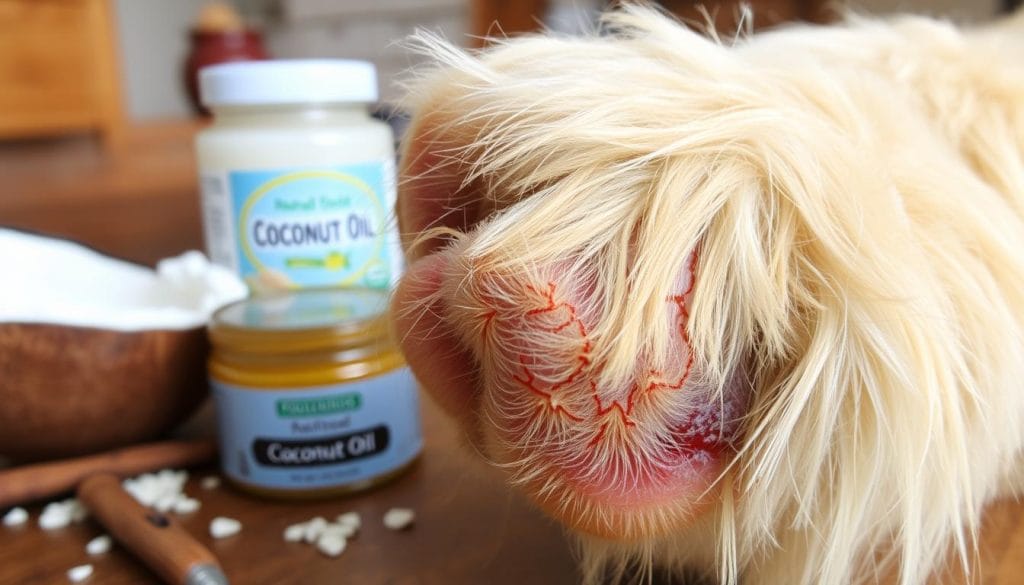
Aloe vera gel is another effective remedy. It cools the skin and soothes itching and inflammation. Use a pure, pet-safe aloe vera gel. Fish oil supplements can also improve skin health over time, thanks to omega-3 fatty acids.
For severe dry skin, try a homemade balm. Mix shea butter, beeswax, and coconut oil, then let it cool. Apply it to affected areas for deep moisturizing and protection.
Using these home remedies can help manage dry skin in pets. They can also improve their skin health. Always talk to your vet before starting any new treatment, especially if your pet’s condition doesn’t get better or gets worse.
Herbal Remedies for Common Skin Problems
Using herbal remedies can help treat your pet’s skin issues. These natural solutions can fix common problems like hot spots and irritations. They do this without using harsh chemicals.
Herbs like calendula, chamomile, and aloe vera are great for soothing and healing. Calendula is often used in natural topical treatments. It has anti-inflammatory properties and helps wounds heal faster.
Chamomile is also excellent for calming your pet’s skin. It reduces itchiness and redness. Aloe vera, on the other hand, moisturizes and improves skin health.
When adding herbal remedies to your pet grooming routine, choose high-quality herbs. Make sure they are free from pesticides or contaminants. Always buy from trusted suppliers for safety and effectiveness.
Start new treatments slowly and watch for any bad reactions. If using essential oils, dilute them a lot to avoid irritation. These natural topical treatments can be a gentle and effective way to solve common skin issues.
It’s wise to talk to a vet or a herbalist who knows about pet care. They can help find the best solution for your pet’s specific needs.
Quick Recommendation: Our blog is filled with tips and information on keeping your dog healthy and happy. If you are interested in natural and holistic approaches to wellness, click here to see our #1 recommendation!
Bathing Your Pet: Best Practices
Keeping your pet’s skin healthy is key. It’s important not to bathe them too much. Over-bathing can dry out their skin and cause irritation. Find a bathing schedule that fits your pet’s needs and lifestyle.
Choosing the right shampoo is essential. Opt for natural pet shampoos to avoid harsh chemicals. These shampoos nourish and soothe your pet’s skin. Many pet owners see a big improvement in their pet’s skin health with natural shampoos.
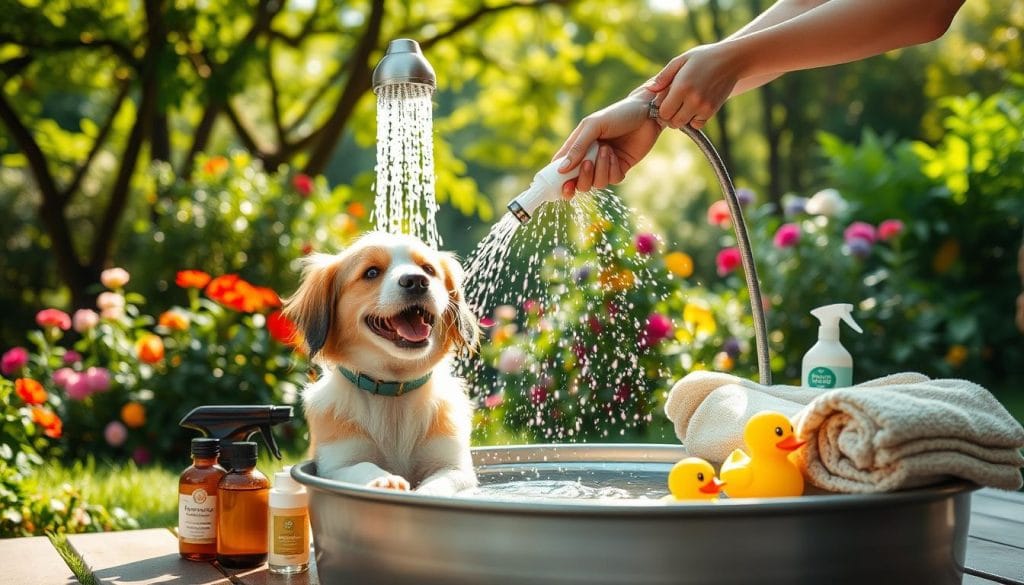
Make bath time a good experience for your pet. Use warm water and have everything ready before you start. Speak softly and calmly to keep your pet relaxed. Also, getting advice from a groomer or vet can help a lot. By following these tips, bath time will be better for your pet.
Recognizing Skin Infections and Parasites
It’s important to know how to spot skin infections and parasites in your pet. Early recognition helps in treating these issues naturally. This way, you can prevent more problems.
Look out for signs like redness, swelling, and unusual discharge. Parasites like fleas, ticks, and mites can also cause trouble. Watch for excessive scratching, bald patches, and inflammation.
Herbal remedies like calendula and chamomile can help soothe and heal your pet’s skin. Regular grooming and natural shampoos also help prevent parasites. They keep your pet’s skin healthy.
If your pet’s issues don’t go away or get worse, see a vet quickly. Knowing how to spot skin problems helps keep your pet happy and healthy.
Maintaining a Healthy Diet for Skin Health
A balanced diet is key for your pet’s skin health. It helps prevent and fix many skin problems.
Essential fatty acids like Omega-3 and Omega-6 are crucial. They keep your pet’s coat shiny and skin hydrated. These fats reduce inflammation, helping with food allergies and sensitivities.
Vitamins and minerals are also important for healthy skin. Vitamin E is a strong antioxidant. Zinc helps with cell production and skin repair. Together, they make your pet’s skin strong and less likely to have problems.

Getting rid of food allergies can greatly improve your pet’s skin. Common allergens include beef, dairy, and grains. A vet can help find out which foods are bad and create a special diet for your pet.
Good pet nutrition leads to a healthy skin diet. It keeps your pet comfortable and their skin looking great. A balanced diet is essential for their skin’s health and overall well-being.
Regular Grooming to Enhance Skin Condition
Keeping your furry friend well-groomed is key for healthy skin. Regular grooming prevents skin problems and boosts overall health. Brushing and combing remove dirt and allergens that can irritate the skin.
Consistent grooming lets you catch skin issues early. This way, you can fix them quickly.
Choosing the right grooming tools is vital. A slicker brush is great for long fur, while a bristle brush is better for short coats. Quality tools make grooming more comfortable and effective for both you and your pet.
Getting advice from professional groomers is also helpful. They provide insights specific to your pet’s needs. Dermatologists agree that grooming keeps fur healthy and improves blood flow. Adopting these habits improves your pet’s look and skin health.
When to Consult a Veterinarian
Your pet’s skin issues might sometimes need more than just natural remedies. Home treatments and herbal solutions can help with minor problems. But, knowing when to see a vet is key for your pet’s health.
If your pet’s skin issue doesn’t get better or gets worse, it’s time to see a vet. Signs like persistent itching, hair loss, open sores, or discomfort that doesn’t go away need vet attention. Vets can handle complex issues like severe allergies, chronic infections, or immune system problems.
Professional care for pets means a vet will do a thorough check-up and create a treatment plan just for your pet. Vets can find problems that aren’t easy to see, like parasites, infections, or health issues. With new advances in pet dermatology, many tough skin problems can be treated, keeping your pet happy and healthy.
Knowing when to get vet help is very important for your pet’s life quality. Watching for warning signs and getting vet advice when needed ensures your pet gets the best care. This improves their skin health and overall well-being.
Quick Recommendation: Our blog is filled with tips and information on keeping your dog healthy and happy. If you are interested in natural and holistic approaches to wellness, click here to see our #1 recommendation!
BTW: If you are looking for tips and tricks on dog training, check out our friends at K9 Training Hub