

Are you having trouble with your pet’s behavior? Pets can show signs of anxiety or aggression, affecting their happiness and yours. Luckily, natural health solutions are becoming more popular. They offer effective ways to tackle these issues.
Whether you’re searching for natural solutions for your cat’s aggression or supplements to calm your dog, many pet owners have found success. These methods are gaining traction.
Imagine a home where your pet is calm and joyful. This dream can become reality with the right approach and understanding. Let’s explore natural remedies that promise to help manage your pet’s needs.
Quick Recommendation: Our blog is filled with tips and information on keeping your dog healthy and happy. If you are interested in natural and holistic approaches to wellness, click here to see our #1 recommendation!
Understanding Common Pet Behavioral Problems
It’s key to know the different behavioral issues pets face. These include too much barking, being destructive, and feeling anxious. Each problem has its own causes and fixes.
Too much barking can come from boredom, fear, or wanting to protect their territory. Finding out why your pet barks too much is the first step. Aggression might be due to past trauma or not being socialized enough. Destructiveness often happens when pets get anxious or bored.
The environment around pets greatly affects their behavior. Making sure they have a fun and safe place is important. Giving them interactive toys can help a lot with being destructive and feeling anxious.
Dealing with these issues needs a balanced approach. Using holistic methods, like a stable home and enough mental stimulation, can really help your pet. This can make them happier and healthier.
Herbal remedies are a natural way to help pets with destructive behavior. Herbs like chamomile and valerian root can calm anxious pets. They can also help pets that bark too much.
Knowing what causes common pet behavioral problems helps you find the best solution. This way, you can ensure a happy and peaceful life with your pet.
The Role of Natural Remedies in Pet Care
Learning about natural remedies in pet care can really help your pet feel better. These solutions can be a big help for pets who get anxious when left alone. They are often safer than traditional medicines because they have fewer side effects.
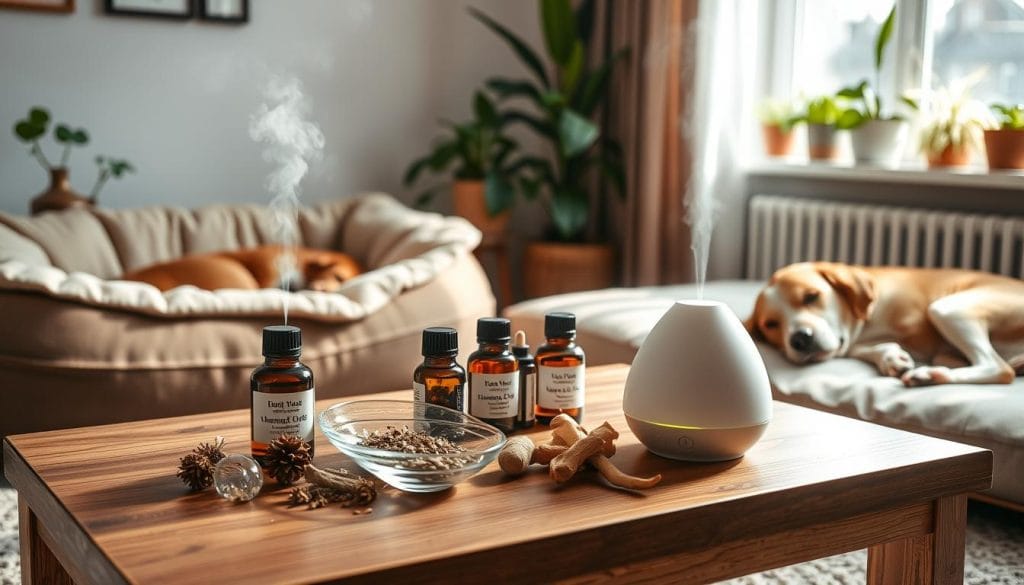
Holistic pet care looks at the whole pet, not just the symptoms. It uses things like herbal supplements and calming pheromones. These can really help pets feel less anxious.
Choosing natural remedies also means your pet is getting a healthier lifestyle. It means less chemicals in their body. This holistic approach can greatly improve your pet’s happiness and health.
Herbal Remedies to Calm Your Pet
When your furry friend is feeling anxious or showing signs of destructive behavior, calming supplements and natural remedies can help. Many herbs are known for their soothing effects. They can make a big difference in your pet’s well-being.
Chamomile is a well-known herb for calming effects. You can add a few drops of chamomile extract to their water or food. Valerian root is also great for reducing stress and anxiety in dogs and cats. It’s usually found in tincture form, which you can mix into their meals.
Lavender is another powerful herb with a relaxing aroma. It can be very soothing to pets. Just a few drops of lavender essential oil in areas where your pet spends time can create a calming environment. Always check with a vet before starting any new herbal remedies to ensure your pet’s safety and effectiveness.
These herbal remedies offer non-invasive ways to manage your pet’s behavioral issues. By adding calming supplements and other herbal options to their routine, you improve their quality of life. You also create a more harmonious home environment.
Essential Oils for Pet Behavior Management
Essential oils can help manage pet behaviors naturally. Aromatherapy with these oils is becoming popular for calming hyperactive pets. Oils like frankincense and bergamot help relax dogs and cats, reducing their hyperactivity.
Before using essential oils for pet anxiety, it’s important to know how to use them safely. Only use high-quality, pure essential oils. Avoid oils that can harm pets, like peppermint and tea tree oils.
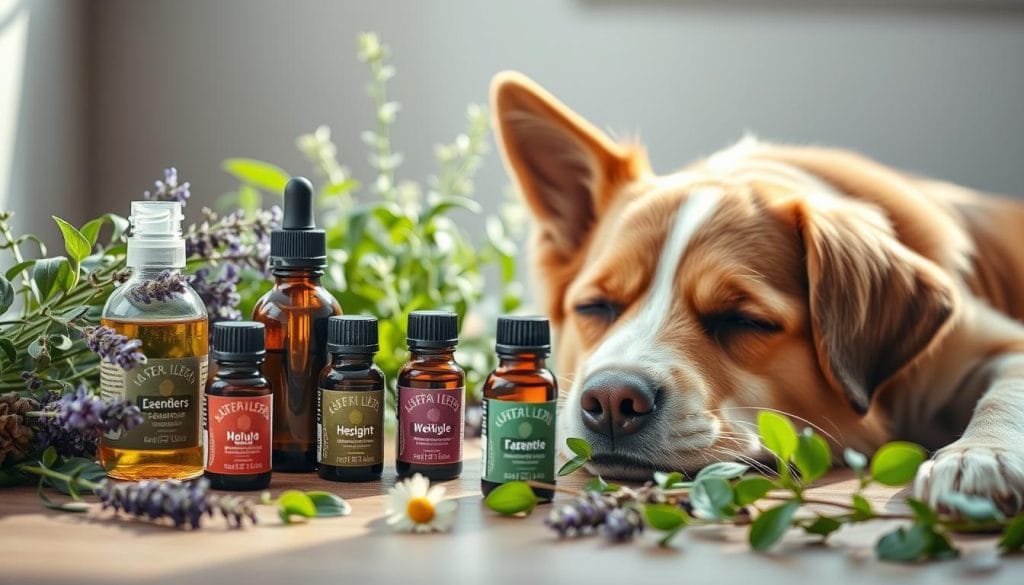
To use essential oils, add a few drops to a diffuser. Place it in a room where your pet spends a lot of time. For applying oils directly, mix a few drops with a carrier oil like coconut or jojoba. Apply it to the back of the neck or the base of the tail. This can help with pet anxiety and aggression in cats.
Watch your pet for any signs of discomfort or irritation. If you see any, stop using the oils. With careful use, essential oils can be a great tool for pet care.
Dietary Changes for Better Pet Behavior
When it comes to pet behavior, “you are what you eat” is true. Changing your pet’s diet can really help their behavior. Using food as medicine works for pets too.
High-quality proteins are key. Foods like chicken and fish give pets the amino acids they need. These are important for brain function and mood.
Adding calming supplements to your pet’s diet can also help. Omega-3 fatty acids, for example, reduce stress and anxiety. Chamomile and valerian root help with separation anxiety by calming pets.
Adding foods high in antioxidants is also good. Blueberries, spinach, and sweet potatoes fight oxidative stress. This can help with mood swings and hyperactivity.
Watch out for food allergies or intolerances. Removing grains or artificial additives can make behavior more stable. A vet can help find the right diet for your pet.
In short, changing your pet’s diet can make a big difference. The right foods and supplements lead to a happier, calmer pet.
Exercise and Play: Natural Behavior Modifiers
Physical activity is great for your pet’s body and mind. It helps them stay healthy and happy. Activities like fetch and walks can change their behavior naturally.
Playing fetch or going for a walk can release energy. It’s especially good for pets with anxiety. Playtime can help reduce barking and stress.
Exercise is a big part of solving pet behavior problems. You might also use essential oils to help hyperactive pets relax. This can make them feel more balanced.
Training Techniques to Correct Behavior
Fixing your pet’s behavior starts with consistent, reward-based training. Positive reinforcement encourages good behavior and stops bad ones. These methods work well with natural remedies for aggression in cats. Always be patient and consistent for the best results.
First, create a structured environment for your pet to learn and grow. Set clear boundaries and routines. Regular feeding, play, and training times help your pet know what’s expected.
Use treats and praise right after your pet shows good behavior. This links the behavior to positive rewards. For example, give a treat and praise if your cat uses the scratching post instead of your furniture.
Clicker training is also effective. The clicker marks the exact moment of good behavior, followed by a reward. It’s great for complex tasks like reducing aggression in cats.
Adding natural remedies for aggression in cats can help too. Herbal supplements like valerian root and essential oils like lavender can calm your pet. But, always talk to your vet before trying new remedies.
Being consistent is key in training. Make sure everyone in the family uses the same techniques. With effort, the right training, and natural remedies, you can change your pet’s bad behaviors.
Quick Recommendation: Our blog is filled with tips and information on keeping your dog healthy and happy. If you are interested in natural and holistic approaches to wellness, click here to see our #1 recommendation!
Home Remedies for General Anxieties
Does your pet have general anxieties? Simple home remedies can help a lot. Start by making a calm space. Understand what makes them anxious and use natural ways to help.
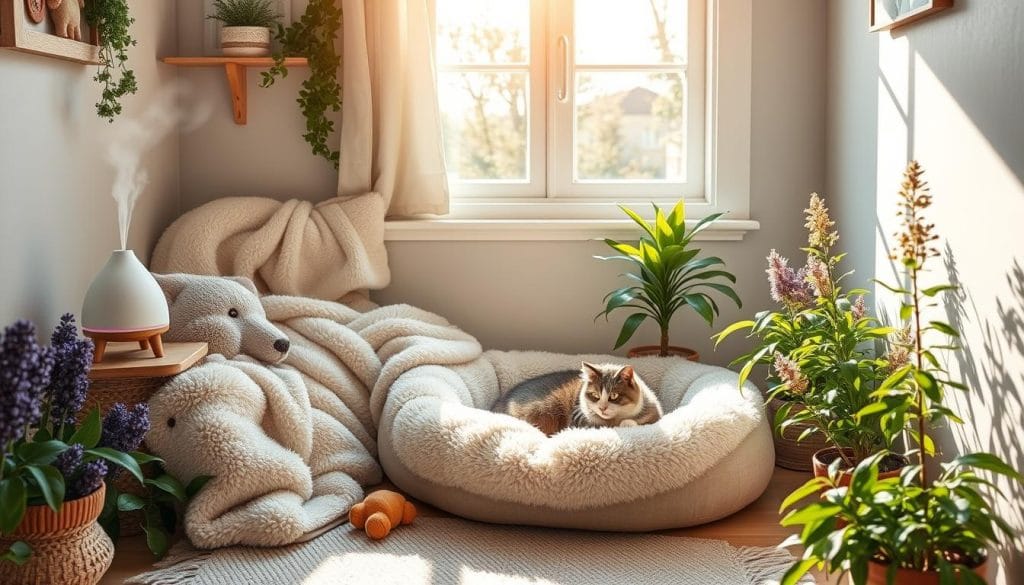
Massage is a great way to calm your pet. It soothes their nervous system and helps them relax. Just gently stroking and massaging them can ease their tension.
Playing calming music is another simple yet effective remedy. Soft, soothing tunes can make a peaceful atmosphere. This can help lower your pet’s anxiety.
Snug apparel, like Thundershirts, can also help. They apply gentle pressure, like a hug. This is great during stressful times like thunderstorms or fireworks. Also, adding calming supplements to their diet can offer extra support. These natural remedies can greatly reduce your pet’s anxiety and stress.
Seeking Professional Guidance
Sometimes, pet behaviors are complex and need expert help. Talking to behavioral specialists is key, especially when natural remedies don’t work. A vet or animal behaviorist can give you advice that fits your pet’s needs.
Behavioral specialists use a mix of medical treatments and training to solve pet behavior problems. By getting professional help, you’re not just treating symptoms. You’re tackling the real issues that affect your pet.
When you meet with a specialist, they’ll look closely at your pet’s behavior, history, and home. This detailed approach helps create a treatment plan that’s just right for your pet. Getting professional help can make your home happier and more peaceful for everyone.
Final Tips for Successful Behavior Management
As we wrap up our look at natural ways to fix pet behavior issues, remember that every pet is different. They might react in various ways to different methods. To really manage behavior well, mix different strategies that fit your pet’s needs.
First, being consistent is vital. Stick to a routine whether you’re training or changing their diet. This makes your pet feel secure and helps reduce bad behavior. Keep a journal to see what works and what doesn’t.
Second, be patient and loving. Changing behavior takes time. Celebrate small wins and keep working towards big goals. Every small change, like diet changes or more playtime, helps.
Lastly, don’t be afraid to try different things together. Sometimes, the best way is a mix of natural remedies, training, and expert advice. Watch how your pet reacts and adjust your plan as needed.
Quick Recommendation: Our blog is filled with tips and information on keeping your dog healthy and happy. If you are interested in natural and holistic approaches to wellness, click here to see our #1 recommendation!
BTW: If you are looking for tips and tricks on dog training, check out our friends at K9 Training Hub