

As a pet owner, you want the best for your furry friend. This includes finding ways to ease their pain. Many in the U.S. are choosing holistic pet care and natural pain relief over drugs.
These natural methods can help your pet feel better and live healthier. It’s important to know how they work and what benefits they offer.
The trend towards holistic pet care is on the rise. More people are avoiding conventional drugs’ side effects. They’re looking for gentler ways to help their pets.
Options like herbal supplements and massage therapy are becoming popular. They offer a natural way to manage pain without drugs. Explore these options to improve your pet’s health and live a more natural lifestyle.
Quick Recommendation: Our blog is filled with tips and information on keeping your dog healthy and happy. If you are interested in natural and holistic approaches to wellness, click here to see our #1 recommendation!
Understanding Pet Pain: Signs and Symptoms
It can be hard to tell if your pet is in pain. But it’s key to their health. Look for changes in how they act. If your dog is usually full of energy but now seems tired, or if your cat is not as loving as usual, they might be hurting.
Pets in pain might make different sounds. They might whimper, yelp, or growl more. Also, if they have trouble moving, like limping or not wanting to climb stairs, it could mean they’re in pain.
Don’t overlook small signs. Even tiny changes can mean a lot. By paying attention and knowing these signs, you can help your pet get the care they need.
Benefits of Using Natural Remedies for Pet Pain
Many pet owners are choosing natural remedies for their pets’ pain. This choice is smart because natural remedies have fewer side effects. They are gentler on pets, leading to fewer bad reactions.
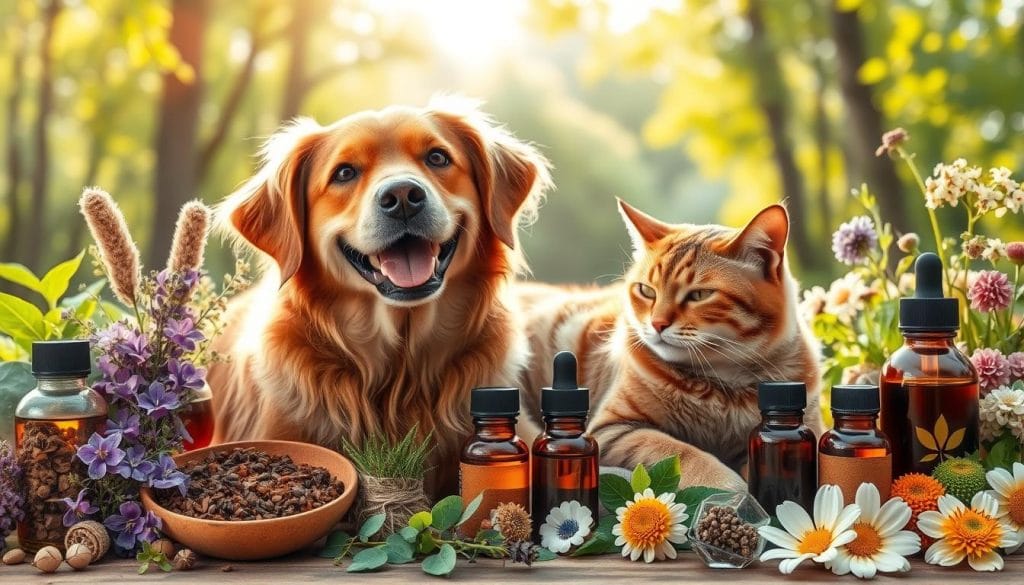
Natural remedies also offer holistic health benefits. They don’t just hide the pain. They work to fix the problem, helping pets feel better overall. This can lead to better health for your pets in the long run.
Moreover, natural remedies are safe and non-toxic. They don’t have harmful chemicals or synthetic stuff. This makes them a better choice for caring for pets over time. It’s part of a bigger trend towards caring for pets in a more natural way.
In short, natural remedies are great for pets. They have fewer side effects, help pets in a holistic way, and are safe. These reasons are why more people are choosing them to improve their pets’ lives.
Herbal Supplements for Pets: A Safe Option?
Thinking about herbal medicine for pets? Safety is key. Are there safe herbal treatments for your pet’s pain? Yes, many herbs can help with herbal pain relief for animals. They offer a natural choice instead of regular medicines.
Turmeric is a safe herb for pets. It fights inflammation and can ease pain from arthritis or injuries. For small dogs or cats, give 1/8 to 1/4 teaspoon daily. Larger dogs can have 1/2 to 1 teaspoon. Always talk to your vet before starting any new supplements.
Ginger is great for pets with motion sickness or digestive problems. Give small breeds 1/4 teaspoon and larger ones up to 1 teaspoon in their food. Remember to check with your vet.
Valerian root can help pets with anxiety or stress. It’s calming and safe when used right. The right dose and how to use it depends on your pet. Always follow your vet’s advice on herbal medicine for pets.
Herbal medicine for pets is a good choice. Make sure to use the right amount and talk to your vet. This way, you’ll get the best care for your pet.
Essential Oils for Easing Pet Discomfort
Therapeutic essential oils for pets are a natural way to help your pet feel better. Aromatherapy is known to reduce pain, anxiety, and improve overall health in pets.
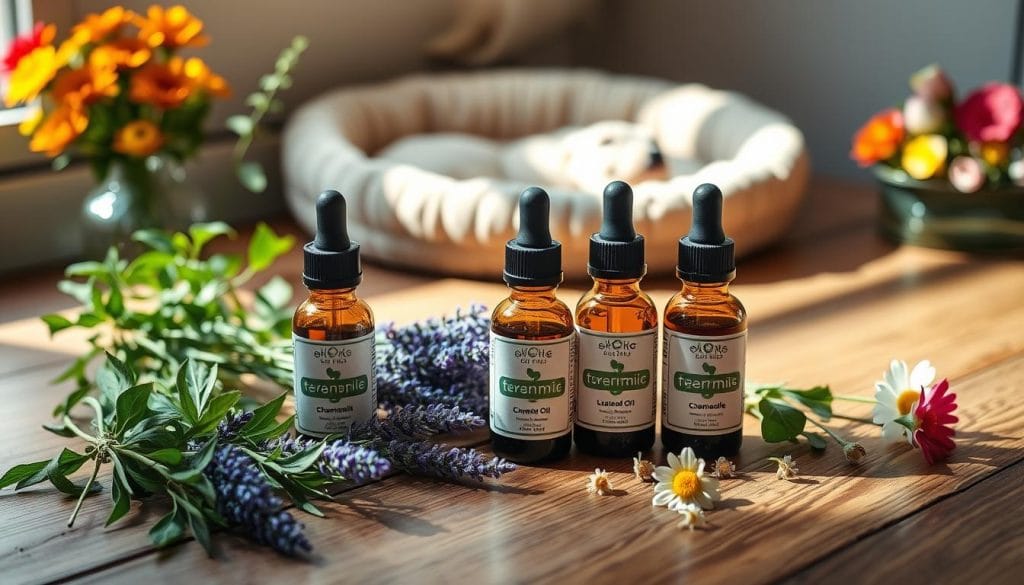
It’s important to know which oils are safe for pets. Lavender and chamomile are good choices. But, oils like tea tree and peppermint are toxic and should be avoided.
To use natural scent therapy safely, you can diffuse oils in your pet’s area or make a diluted spray for their bed. Always dilute the oils correctly and talk to your vet before starting.
Using essential oils can help with joint pain, skin issues, and stress in pets. With the right guidance, aromatherapy can be a great addition to your pet care.
Managing Your Pet’s Pain with Natural Remedies
When your furry friend is in pain, you want to find the best solutions to make them comfortable. Natural remedies can offer a gentle yet effective approach. Many pet owners turn to natural methods for various benefits.
Natural remedies such as herbal supplements and essential oils can help alleviate discomfort in your pet. These methods are often less invasive and can be used in conjunction with other treatments recommended by your vet. Essential oils like lavender and chamomile are commonly used to help ease anxiety and pain in pets. Ensure you properly dilute essential oils before using them on your pet.
Additionally, natural joint supplements containing ingredients like glucosamine and chondroitin can support joint health and reduce pain in older pets.
Using these remedies requires patience and a good understanding of your pet’s needs. Always consult your veterinarian before starting any new treatment. Natural remedies can be an excellent complementary approach, aiding in your pet’s overall pain management strategy. Remember, every pet is unique, and what works for one may not work for another. Therefore, it’s crucial to monitor your pet’s response and adjust treatments as needed.
Quick Recommendation: Our blog is filled with tips and information on keeping your dog healthy and happy. If you are interested in natural and holistic approaches to wellness, click here to see our #1 recommendation!
Massage Therapy for Pets: Techniques and Benefits
Massage therapy for pets can bring many health benefits. Knowing the right techniques is crucial to get the most out of it. Regular massages improve blood flow, ease muscle tension, and help pets relax.
First, pick a quiet, comfy spot where your pet feels safe. Start by softly stroking their fur to calm them down. The aim of animal massage is to ease pain and discomfort. Watch your pet’s reactions and stop if they seem uncomfortable.
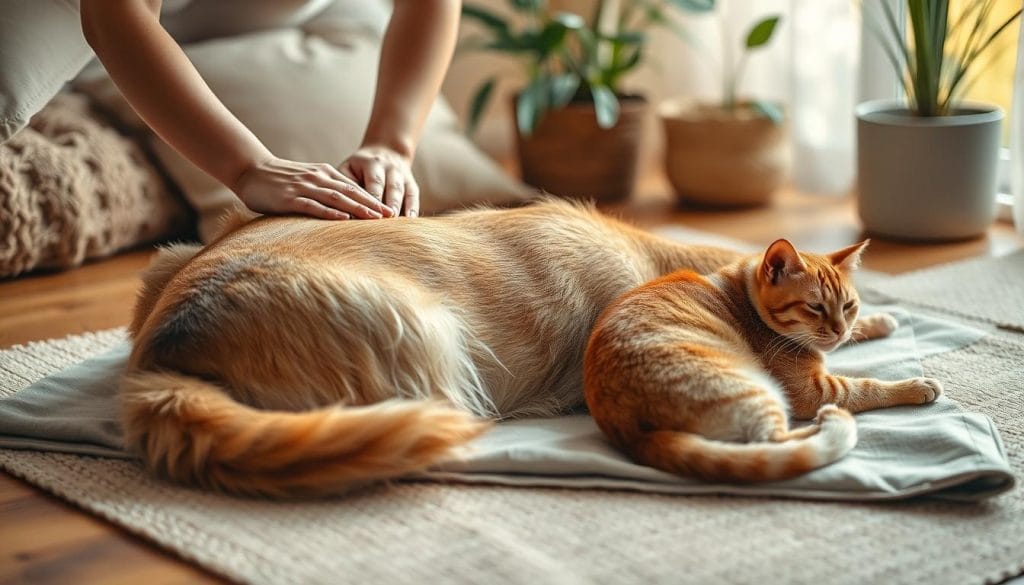
Start with slow, long strokes on their back and sides. Gradually add more pressure, but only if your pet can handle it. You can also use circular motions on big muscles like shoulders and thighs. Always move gently and in a rhythm, making sure your pet enjoys it.
Pet massages help with lymphatic flow, removing toxins and boosting the immune system. For anxious pets, massages can greatly lower stress. When done right, it strengthens the bond between you and your pet.
Acupuncture and Acupressure for Pets
Exploring veterinary acupuncture and acupressure can be very enlightening for pet owners. These ancient practices come from traditional Chinese medicine. They have been adapted to help our furry friends with pain relief.
Veterinary acupuncture uses fine needles in specific points on an animal’s body. It stimulates natural healing and reduces pain. Acupressure, on the other hand, uses gentle pressure on points without needles. It’s great for pets that don’t like needles.
Both techniques are part of holistic veterinary therapies. They aim to treat the whole animal, not just the symptoms. This approach is very effective.
When you take your pet for these therapies, you’ll find a calm, relaxing place. The practitioner will check your pet’s condition and choose the right method. Many pet owners see big improvements, like less pain and better movement.
Dietary Changes to Help Manage Your Pet’s Pain
Dietary changes can greatly help manage your pet’s pain. Anti-inflammatory diets for pets are a key strategy. They help reduce pain and improve your pet’s overall health.
Anti-inflammatory foods are essential for pain management in animals. Fish oil, rich in omega-3 fatty acids, is a great choice. Turmeric and ginger also have natural anti-inflammatory properties, making them excellent for pets.
Changing your pet’s diet might seem hard, but it can be done gradually. Start by mixing the new food with their current diet. Increase the new food’s proportion over a week. This helps your pet adjust without digestive problems.
Consider adding supplements to support pain management. Glucosamine and chondroitin are good for joint health and pain relief.

Always talk to your vet before changing your pet’s diet. They can give advice tailored to your pet’s needs. Improving nutrition for pain management can greatly benefit your pet’s health and happiness.
The Role of Physical Activity in Pain Management
Physical activity is key in managing your pet’s pain. Adding exercise for pet pain relief can ease discomfort and improve health. Start with gentle exercises to avoid hurting your pet more.
Professional physical therapy for pets offers exercises tailored to your pet’s needs. Simple activities like short walks or play sessions can help a lot. They improve mobility and reduce stiffness.
Start with gentle activities and slowly increase the intensity. This helps your pet adjust without getting hurt. Swimming or using balance boards are great for pets with injuries. A vet or pet physical therapist can help create a safe exercise plan for your pet.
Hydrotherapy: Water-Based Exercise for Pets
Hydrotherapy is a special form of water therapy for animals. It offers many benefits, especially for pets with pain or mobility issues. Water’s buoyancy eases the stress on joints and muscles, making it perfect for rehab and pain relief.
One key advantage of hydrotherapy for pets is that it lets them exercise without the pain of land activities. Water provides controlled resistance that strengthens muscles, boosts heart health, and increases flexibility.
This therapy is great for pets with arthritis, hip dysplasia, or those recovering from surgery. It helps them work out without pain, supporting their recovery.
Veterinary centers often have hydrotherapy services, like underwater treadmills and heated pools for pets. But, you can also do it at home with your vet’s help. Hydrotherapy, whether at a center or home, greatly benefits pets, helping them live healthier and more active lives.
The Importance of Regular Vet Check-Ups
Regular vet visits are key to keeping your pet healthy and comfortable. A consistent schedule helps catch problems early. This ensures pain management works well and on time.
A vet can spot small changes in your pet’s behavior or health. These small signs are crucial for adjusting treatment plans. This way, your pet gets the best care possible.
By making vet visits a priority, you’re giving your pet the best pain management plan. This partnership with your vet tackles current health issues and prevents future pain.
Conclusion
Discovering natural pain management for pets is a kind and effective way to keep them comfortable and happy. You’ve learned about the signs of pet pain and different remedies like herbal supplements and essential oils. Massage, acupuncture, diet changes, and hydrotherapy are also options.
Each method helps create a complete care plan for your pet’s well-being. It’s important to remember that every pet is different. Working with your vet to find the right pain management plan is key.
This partnership ensures the solutions are safe and effective, improving your pet’s life. Regular vet visits are also crucial for monitoring your pet’s health and adjusting the plan as needed.
By using these natural remedies, you’re not just treating pain but also improving your pet’s life overall. Your care and dedication can greatly improve their happiness and health. Keep learning and adapting to find the best for your pet.
Quick Recommendation: Our blog is filled with tips and information on keeping your dog healthy and happy. If you are interested in natural and holistic approaches to wellness, click here to see our #1 recommendation!
BTW: If you are looking for tips and tricks on dog training, check out our friends at K9 Training Hub